Author: Sarah Conard

How to Stay Consistent With Your Podcast Without Burning Out | Podcasting Unlocked

Consistency is one of the biggest challenges podcasters face. Between busy schedules, creative burnout, and the pressure to always have fresh content, showing up week after week takes intention, discipline, and a sustainable workflow. This week, episode 290 of Podcasting Unlocked is about building a consistent podcasting practice without burning out!

Wendy P is a podcaster, content creator, musician, and co-host of Flick and Beans, a movie review podcast where she and her longtime friend and creative partner, Bridget, discuss films through the lens of their unique perspectives and decades-long friendship. Since launching the show, they’ve released a new episode every Monday while balancing their creative lives and maintaining their passion for podcasting.

In this episode of Podcasting Unlocked, Wendy P shares how she and her co-host have built a sustainable podcasting routine, the lessons they’ve carried over from years of performing together as musicians, and the strategies they use to stay consistent without sacrificing creativity.

Key Takeaways:

  • How performing as musicians helped prepare them for podcasting consistency.
  • The systems they use to release a new episode every week.
  • Why creating a backlog of episodes can help prevent burnout.
  • How guest hosts and collaboration can keep content fresh.
  • The surprising ways podcasting improves communication and speaking skills.
  • Using automation and AI tools to streamline podcast promotion.
  • Why community engagement and audience participation help shape their content.
  • The importance of giving yourself permission to evolve your podcast over time.

How to Stay Consistent With Your Podcast Without Burning Out with Wendy P.

Consistency Doesn’t Happen by Accident

Many podcasters assume consistency comes down to motivation. If they’re struggling to maintain a publishing schedule, they believe they simply need more discipline or better time management.

Wendy’s experience tells a different story.

For her and her co-host Bridget, consistency is the result of creating a routine they can realistically maintain. Every Sunday, they record. Every Monday, an episode goes live. Over time, that process has become second nature.

The lesson isn’t that every podcaster should follow the same schedule. It’s that consistency becomes much easier when your podcast has a predictable place in your life.

Rather than relying on motivation, create a rhythm you can sustain.

The Power of Building a Backlog

One of the smartest decisions Wendy and Bridget made was creating a buffer of episodes.

Life happens. Illness, travel, family obligations, and unexpected challenges can quickly disrupt even the best intentions. Having episodes recorded in advance provides breathing room when those situations arise.

A backlog doesn’t just protect your publishing schedule. It also reduces stress.

Instead of constantly feeling like you’re one missed recording away from missing a release date, you gain the flexibility to handle life’s surprises without sacrificing consistency.

Podcasting Is Easier When You’re Not Doing It Alone

Collaboration has played a major role in the success of Flick & Beans.

Not only do Wendy and Bridget share the workload, but they also occasionally bring in guest hosts to provide fresh perspectives and keep conversations interesting.

For solo podcasters, collaboration can take many forms:

  • Guest interviews
  • Cross-promotions with other creators
  • Guest hosts
  • Community partnerships
  • Podcast swaps

The goal isn’t simply to grow your audience. It’s to create a podcast ecosystem that feels energizing rather than isolating.

Podcasting Can Make You a Better Communicator

One unexpected benefit Wendy shared is how podcasting has improved her speaking skills.

Most of us aren’t aware of our verbal habits until we hear ourselves on a recording. Filler words, repetitive phrases, and communication patterns become much easier to recognize when you’re editing your own content.

Over time, that awareness creates improvement.

Podcasting isn’t just a marketing tool. It’s also a skill-building tool.

Every episode becomes an opportunity to become a clearer, more confident communicator.

Use Automation to Reduce Repetitive Work

Creating content is rewarding. Repeating the same promotional tasks every week often isn’t.

That’s why Wendy relies on automation tools to help manage social media promotion. By automating portions of the distribution process, she can spend more time creating content and less time manually posting updates.

Automation doesn’t replace authenticity.

Instead, it allows creators to focus their energy on the work that matters most while reducing repetitive administrative tasks.

For many podcasters, even a few small automations can save hours each month.

Sustainable Podcasting Requires Flexibility

One of the most important themes throughout this conversation was adaptability.

As Wendy looks ahead to future travel plans and life changes, she recognizes that their podcast may need to evolve. Recording schedules may shift. Formats may change. New systems may need to be introduced.

That’s normal.

The podcasters who succeed long-term aren’t the ones who never change. They’re the ones who adapt while staying committed to serving their audience.

Sustainability isn’t about maintaining the same process forever.

It’s about creating a podcast that can grow alongside your life.

Your Action Plan This Week

  • Create a Recording Routine
  • Choose a consistent recording day and time that fits your schedule and treat it like a non-negotiable appointment.
  • Build an Episode Buffer
  • Record at least one extra episode this month to begin creating a backlog for future flexibility.
  • Audit Your Workflow
  • Identify one repetitive task that could be automated or simplified.
  • Pay Attention to Your Speaking Habits
  • Listen back to a recent episode and note any filler words or communication patterns you’d like to improve.
  • Look for Collaboration Opportunities
  • Reach out to another creator, guest, or community partner who could bring fresh energy to your podcast.

If you’re struggling to stay consistent with your podcast, remember that sustainability isn’t about pushing harder. It’s about creating systems, routines, and support structures that make podcasting enjoyable for the long haul.

If you’d like help building a podcast strategy that supports your goals without leading to burnout, visit helpmypod.com and book a free consultation.

Together, we’ll create a podcasting workflow that works for your life—not against it.

Be sure to tune in to all the episodes to receive practical strategies for growing your podcast, streamlining production, and turning listeners into loyal clients.

Thank you for listening! If you enjoyed this episode, take a screenshot of the episode to post in your stories and tag me! And don’t forget to follow, rate and review the podcast and tell me your key takeaways!

Learn more about Podcasting Unlocked at https://galatimedia.com/podcasting-unlocked/ 

CONNECT WITH WENDY P:

Instagram: @flickandbeans

Instagram: @wendypismagic

Podcast: Flick and Beans

CONNECT WITH ALESIA GALATI:

Instagram

LinkedIn

Work with Galati Media! 

Work with Alesia 1:1

The Podcast Workflow Audit: Systems, AI, & Automation to Get Your Time Back| Podcasting Unlocked

Podcasting can be one of the most powerful ways to grow your business, but if every episode leaves you feeling overwhelmed, exhausted, and scrambling to keep up, something needs to change. Sustainable podcasting isn’t about working harder—it’s about building systems that support you behind the scenes. In this episode of Podcasting Unlocked, we’re opening the vault and revisiting some of the most impactful conversations we’ve had about creating a podcast workflow that actually works. This special compilation episode features insights from four podcasting experts who have mastered efficiency, automation, and sustainable growth. From custom GPTs and project management systems to editing shortcuts and intentional calendar management, these strategies will help you streamline your process and reclaim your time. Whether you’re a solo podcaster or managing a growing team, you’ll walk away with practical ideas you can implement immediately. This week, episode 289 of Podcasting Unlocked is about building a sustainable podcast workflow!

In this episode of Podcasting Unlocked, I’m sharing expert-backed strategies to simplify your podcasting process, reduce overwhelm, and create systems that support long-term success.

Key Takeaways:

  • Create Custom GPTs That Function Like SOPs: Learn how Marcy Rossi uses custom GPTs to automate repetitive podcast tasks while preserving her unique voice, style, and content structure.
  • Build Repeatable Systems for Every Episode: Discover why Jacki Hayes believes documented workflows and project management tools are essential—even for solopreneurs.
  • Reduce Editing Time with Better Recording Habits: Explore Joe Casabona’s simple strategy of taking notes during interviews to dramatically speed up post-production.
  • Use Timestamps and Markers to Streamline Production: Learn how small recording habits can save hours of editing and improve collaboration with your team.
  • Manage Your Calendar Like a CEO: Understand Lance Cayko’s philosophy of making appointments instead of simply scheduling tasks and how that shift creates more freedom and consistency.

The Podcast Workflow Audit: Systems, AI, & Automation to Get Your Time Back

YOUTUBE EMBED

Stop Reinventing the Wheel with Custom GPTs

One of the biggest time drains in podcasting is repeating the same tasks over and over again. Writing show notes. Creating titles. Drafting social posts. Formatting content.

That’s why Marcy Rossi recommends building a custom GPT that functions like a Standard Operating Procedure (SOP).

Instead of starting from scratch every time, Marcy uploads examples of her past content, her preferred writing style, and detailed instructions into a custom GPT. The result is a system that understands her voice, follows her formatting preferences, and generates content that requires significantly less editing.

The real benefit isn’t just saving time—it’s reducing decision fatigue. When your systems already know how you work, you spend less energy managing the process and more energy creating meaningful content.

Why Every Podcaster Needs a Workflow System

Many podcasters assume project management tools are only necessary once they hire a team.

Jacki Hayes disagrees.

Whether you’re a solo creator or managing multiple contractors, having a documented workflow ensures that no important step gets missed. Guest communication, recording preparation, file organization, publishing deadlines, promotion tasks—every part of the process should have a home.

Jacki uses ClickUp to manage her podcast, complete with recurring checklists, templates, and documented SOPs. Even when she temporarily worked with a virtual assistant, the handoff process was seamless because everything was already documented.

The lesson here is simple: systems aren’t something you create after growth. They’re what make growth possible.

Cut Your Editing Time in Half

For many podcasters, editing is the most time-consuming part of the production process.

Joe Casabona shared one of the simplest productivity hacks imaginable: take notes while you’re recording.

Instead of listening to the entire interview again later, jot down quick timestamps whenever something needs attention:

  • Guest misspoke
  • Host stumbled over a question
  • Great quote for a cold open
  • Segment that needs to be shortened
  • Technical issue to remove

These notes become a roadmap for editing.

Combined with platforms like Descript or Riverside, timestamps make it significantly easier for you—or your editor—to find key moments without searching through an hour-long recording.

A few seconds spent taking notes during the conversation can save hours afterward.

Small Recording Habits Create Massive Time Savings

Another insight from Joe’s interview focused on how you handle mistakes during recording.

Many hosts try to power through errors without stopping. Unfortunately, that often creates more work later.

Instead, simply pause.

Take a breath. Gather your thoughts. Then restart the sentence.

Those pauses create visual markers in editing software, making mistakes much easier to identify and remove.

Likewise, using built-in tools like markers, clip notes, or timestamps can dramatically improve the editing process without requiring any additional software.

Sometimes the fastest workflow improvements come from changing your habits—not adding new tools.

Stop Scheduling Tasks and Start Making Appointments

One of the most powerful mindset shifts in this episode came from Lance Cayko.

When asked how he manages a successful architecture firm, teaches at universities, hosts a podcast, and maintains a personal life, his answer was surprisingly simple:

“I make appointments.”

Instead of viewing tasks as optional items on a to-do list, Lance treats everything that matters as a calendar commitment.

That includes:

  • Podcast recordings
  • Content creation
  • Exercise
  • Family time
  • Self-care
  • Professional development

By making appointments for what matters, he creates intentional space for both his business and personal priorities.

His philosophy is rooted in a simple belief:

Discipline creates freedom.

When you proactively allocate your time, you’re far less likely to feel overwhelmed by competing priorities.

Sustainable Podcasting Requires Infrastructure

The common thread throughout all four expert interviews wasn’t AI, software, or productivity hacks.

It was intentionality.

Sustainable podcasting doesn’t happen because you’re more motivated than everyone else.

It happens because you’ve built systems that support you.

Whether that’s a custom GPT, a project management platform, a note-taking habit, or a better calendar strategy, the goal is the same: create infrastructure that allows your podcast to thrive without consuming your entire life.

Your Action Plan This Week

Build One Repeatable Process
Choose one recurring podcast task and document it step-by-step as an SOP.

Take Notes During Your Next Recording
Add timestamps whenever something important happens and compare your editing time afterward.

Audit Your Calendar
Identify one podcast-related activity you can turn into a recurring appointment instead of a last-minute task.

Create a System Before You Need One
Even if you’re a solo creator today, start documenting your workflow now to make future delegation easier.

If podcasting is starting to feel overwhelming, remember that you don’t have to work harder—you need systems that work smarter.

If you’d like help auditing your workflow, identifying bottlenecks, and building a sustainable podcast production process, visit helpmypod.com and book a free consultation.

Together, we’ll create a workflow that supports your podcast, your business, and your life.

Be sure to tune in to all the episodes to receive practical strategies for growing your podcast, streamlining production, and turning listeners into loyal clients.

Thank you for listening! If you enjoyed this episode, take a screenshot of the episode to post in your stories and tag me! And don’t forget to follow, rate and review the podcast and tell me your key takeaways!

Learn more about Podcasting Unlocked at https://galatimedia.com/podcasting-unlocked/ 

CONNECT WITH ALESIA GALATI:

MENTIONED EPISODES:

Episode 236 with Marci Rossi

Episode 253 with Jacki Hayes

Episode 157 with Joe Casabona

Episode 143 with Lance Cayko

Building a Micro-Community: Integrating Substack with Your Podcast | Podcasting Unlocked

Many independent creators face a frustrating feedback vacuum: you publish high-quality audio week after week but have no data on who is listening or how to reach them directly. If you are struggling to build a predictable, independent revenue stream or want to stop relying purely on traditional RSS feeds, it might be time to rethink your distribution setup. In this episode of Podcasting Unlocked, Alesia shares some insights inspired by a recent strategy session with a group of C-suite level women. She discusses the benefits and limitations of using Substack for podcast hosting. Discover how to bypass anonymous download metrics, leverage direct email capture, and seamlessly build a subscription-based podcast monetization model that turns casual listeners into a highly engaged community. This week, episode 288 of Podcasting Unlocked is about integrating substack with your podcast! 

Key Takeaways:

  • Bypass Anonymous Platform Directories: Discover how hosting your show via a newsletter-centric platform helps you capture listener emails directly, ending your dependence on anonymous dashboard downloads.
  • Unlock Instant Audience Feedback: Learn how integrated web features allow you to break the traditional one-way audio vacuum. Use real-time comment threads and community elements to secure immediate validation on your content.
  • Simplify Paid Subscription Models: Explore the step-by-step mechanics of building predictable monthly or annual revenue. Learn how to incentivize your community to pay a modest fee for premium content options.
  • Design Compelling Premium Incentives: Master the art of the premium offering. Discover how simple, low-friction add-ons—like ad-free episodes, early release schedules, or exclusive bonus solo audio—drive high conversion rates.
  • Evaluate Multi-Format Infrastructure Capabilities: Weigh the strategic pros and cons of using text-and-audio hybrid networks like Substack versus maintaining a standard standalone web setup to determine what best fits your long-term expansion goals.

Building a Micro-Community: Integrating Substack with Your Podcast

YOUTUBE EMBED

Breaking the Feedback Vacuum via Email Capture

The single greatest flaw of traditional podcast directories is the lack of audience data. When someone listens to your episode on Apple Podcasts, Apple owns that relationship. If that platform alters its algorithm tomorrow, your ability to reach those listeners vanishes.

Substack flips this dynamic on its head by treating your podcast like a multimedia newsletter. Before someone can hit play or subscribe to your feed on the web, they are prompted to enter their email address.

This simple structural shift instantly transforms anonymous listeners into verified email subscribers. Instead of praying that your audience remembers to visit your website or click the single link in your show notes, you are actively building an independent database from day one. You move away from vague “brand exposure” metrics and start measuring true, addressable business growth.

The Shift from One-Way Broadcasting to Community Engagement

Traditional podcasting is inherently isolating. It is a one-way broadcast where you speak into a microphone and hope your message resonates somewhere out in the digital ether. If a listener has a thought, a question, or a piece of feedback, the administrative friction to share it is too high—they have to stop what they are doing, open a separate social media app, track down your profile, and send a message.

Because Substack integrates web posts, email newsletters, and audio into a unified feed, it lowers the barrier for audience engagement. Every episode you post functions as an interactive blog entry complete with an open comment section.

“I love it if I can get instant feedback,” I noted during the episode. When your community can easily reply to an episode directly from their email inbox or a web browser, you gain immediate validation on what content is moving the needle for your business. It transforms passive listeners into an active, collaborative network of peers.

The Mechanics of Predictable, Subscription-Based Monetization

If your current monetization strategy relies heavily on chasing corporate sponsorships, you are likely feeling the strain of fluctuating download requirements. Securing advertisers requires a massive top-of-funnel reach that many niche, B2B creators simply don’t want or need to build.

Substack simplifies the path to predictable revenue by building a direct subscription engine into your audio feed. Instead of relying on complex third-party software or separate membership platforms like Patreon, you can lock premium episodes behind a paywall with a single click.

The psychology here is powerful. You aren’t asking your audience for a massive, high-friction financial investment. You are inviting your most dedicated superfans to support your show’s longevity for a modest, recurring fee—think $4 a month or $40 a year. When scaled across a dedicated community, this direct-to-consumer model provides independent creators with unprecedented financial stability.

Crafting the Perfect Premium Audio Incentives

A major roadblock that stops podcasters from launching a paid subscription is the fear of doubling their creation workload. We assume that premium content requires producing entirely separate, highly produced weekly episodes.

The reality is that your most loyal community members will gladly pay for simple, low-friction lifestyle upgrades. During our C-suite strategy session, we mapped out a few highly effective, low-burden premium perks you can implement immediately:

  • Ad-Free Feeds: Let your paid members enjoy an uninterrupted, seamless listening experience.
  • Early-Access Schedules: Release your standard public episodes to your paid subscribers 48 hours before they hit the mainstream directories.
  • Exclusive Bonus Audio: Record a quick, unedited 5-to-10-minute behind-the-scenes solo reflection or an extended Q&A segment at the end of your standard interviews.

Is Substack Right for Your Brand Infrastructure?

Substack is an incredible tool if your business relies on a text-and-audio hybrid format, and it is a phenomenal model for creators who want to prioritize direct email data over anonymous platform vanity metrics. However, it isn’t an all-or-nothing decision. You can easily use a platform like Substack as a supplemental community landing page while keeping your main show hosted on a traditional provider like Buzzsprout.

The best distribution strategy is simply the one that aligns perfectly with your revenue targets and your creative capacity.

Your Monetization Challenge for This Week:

  1. Brainstorm the Perks: Sit down and write down two or three simple, high-value perks you could easily create without burning out.
  2. Run the Math: If just 5% of your current listener base invested $4 a month into your show, what would that recurring revenue look like for your business operations?
  3. Audit Your Data Ownership: Ask yourself honestly: if Apple Podcasts or Spotify disappeared tomorrow, how many of your current listeners do you have a direct way to email?

Feeling scattered about how to structure your podcast funnel or monetize your feed? You don’t have to figure out these technical platform transitions in isolation. If you are ready to stop guessing, exit the feedback vacuum, and start turning your creative content into a high-converting business asset, let’s look at your options together.

Be sure to tune in to all the episodes to receive tons of practical tips on turning your podcast listeners into leads and to hear even more about the points outlined above. 

Thank you for listening! If you enjoyed this episode, take a screenshot of the episode to post in your stories and tag me! And don’t forget to follow, rate and review the podcast and tell me your key takeaways!

Learn more about Podcasting Unlocked at https://galatimedia.com/podcasting-unlocked/ 

CONNECT WITH ALESIA GALATI:

Instagram

LinkedIn

Work with Galati Media! 

Work with Alesia 1:1

LINKS MENTIONED:

Strategic Buzzsprout Features to Boost Discovery and Engagement with Jordan Blair

Using Your Podcast to Leave the Algorithm with Leah Kern | Podcasting Unlocked

Are you trapped on the content creation hamster wheel, spending hours filming Reels, writing captions, and fighting an unpredictable algorithm just to see your engagement drop? Many business owners feel exhausted by the constant demand of social media marketing, yet they dread deleting their accounts because they fear their business will become invisible. In this episode of Podcasting Unlocked, we sit down with Leah Kern to discuss her successful social media exit. Leah shares how she strategically transitioned away from platforms like Instagram and used her podcast as her primary growth vehicle. We dive into how to foster deep audience engagement that converts listeners into long-term clients and the operational adjustments needed to ensure true podcast sustainability. This week, episode 286 of Podcasting Unlocked is about using your podcast to leave the algorithm! 

Key Takeaways:

  • The Strategic Social Media Exit: Learn how Leah replaced the daily grind of social media algorithms with a highly intentional combination of an evergreen podcast and a dedicated email newsletter.
  • Deepen Engagement via Audio: Discover why an intimate audio format fosters stronger trust and a deeper connection with your ideal audience than a 60-second viral video clip ever could.
  • Balance Solo and Guest Cadences: Explore how structured podcast seasons—blending solo education with strategic guest episodes—keep your content high-quality and sustainable.
  • Leverage the Power of Private Feeds: Understand how introducing a private podcast or exclusive audio resources can solidify client referrals and build an insulated community ecosystem.
  • Frictionless Pitching for Network Growth: Master the art of the perfect podcast pitch. Learn why giving your target hosts a list of exact questions eliminates administrative friction and secures your spot on their schedule.

Using Your Podcast to Leave the Algorithm with Leah Kern

YOUTUBE EMBED

The Alternative Marketing Funnel: Evergreens Over Algorithms

When Leah made the choice to delete her social media, she didn’t just stop marketing; she shifted her energy from transactional, short-form content to long-form, evergreen assets.

Instead of fighting for attention in a crowded feed where content dies after 24 hours, Leah replaced the grid with a highly intentional combination of an audio podcast and a dedicated email newsletter. “I’m very diligent about the newsletter,” Leah shared, noting that her podcast drives traffic to her site, where readers can subscribe to receive her deeper written insights.

An evergreen funnel respects your time. An episode you record today will continue to show up in search results and build authority for your brand months—and even years—down the road.

The Power of Audio Intimacy and Audience Engagement

Why does a podcast make a social media exit possible? Because the depth of audience engagement in an audio format is unmatched.

On social media, you have about three seconds to capture a distracted scroller’s attention. On a podcast, your listeners are dedicating 30, 45, or 60 minutes of focused attention to your voice. They invite you into their private spaces—their morning walks, their commutes, or their kitchen routines.

This sustained connection bypasses superficial marketing and builds immediate, unshakeable trust. In Leah’s case, an anti-diet podcast strategy requires a high level of vulnerability and nuance. A 60-second viral video clip cannot hold the nuance required to discuss body image liberation or intuitive eating. Her podcast gives her the space to showcase her true expertise, making her listeners feel safe enough to take the next step and hire her.

Structuring Podcast Seasons for Quality and Sustainability

One of the secrets to Leah’s podcast sustainability is how she structures her show’s cadence. To keep content quality high without burning out, she utilizes a seasonal model that carefully balances solo education with guest interviews.

  • Solo Episodes: These are her foundational pillars. They allow her to speak directly to her ideal client, breaking down complex topics and establishing her clear methodology.
  • Guest Episodes: These bring fresh perspectives to her community and naturally expand her network by collaborating with peers in adjacent spaces.

By planning her content in distinct seasons, she avoids the endless weekly pressure of production, ensuring that her show remains a joy to produce rather than an administrative burden.

Insulating Your Community with Private Feeds

Monetization and growth don’t always have to happen on a public stage. During our conversation, we explored how utilizing private podcasts or exclusive audio resources can solidify your relationship with current clients and drive powerful client referrals.

When you create an insulated audio ecosystem—whether it’s a private audio training for your membership or a hidden resource feed for your 1-on-1 clients—you increase the lifetime value of your community. Your clients become your biggest advocates, referring peers to your ecosystem because the depth of support you offer off-screen is completely unparalleled.

Frictionless Pitching for Strategic Network Growth

If you aren’t using social media hashtags for discovery, how do you find new listeners? You leverage other people’s audiences through strategic podcast guesting.

Leah has mastered the art of the podcast pitching process by eliminating administrative friction for the hosts she contacts. “When I pitch someone to be on their show, I say, here are the exact questions you could ask me,” Leah explained.

As a host myself, I can tell you that this is a total game-changer. When a guest hands you a curated list of high-value questions that highlight a unique perspective, they save you hours of prep time. It turns a potential “let me think about it” into an immediate, enthusiastic “yes”.

Change the Marketing Rules

Your business strategy should support your lifestyle and your mental health, not compromise them. If the constant demand of social media is draining your creative energy, remember that you have the permission to step away and build a marketing funnel that respects your boundaries.

Your Intentional Action Plan for This Week:

  1. Run an Energy Audit: Track how you feel after spending an hour creating social media content versus an hour recording an intimate podcast episode.
  2. Simplify Your Next Pitch: The next time you pitch to be a guest on a show, include 3 to 5 exact questions to make it a frictionless “yes” for the host.
  3. Map an Evergreen Connection: Think about how your next solo episode can directly solve a core problem for your ideal client, driving them straight to your newsletter list.

Are you ready to leave the algorithm grind behind and build a high-converting podcast funnel? If you are feeling exhausted by your marketing routine and want to restructure your show’s cadence for long-term growth, I am here to help you navigate the shift.

Book a free consultation with me at helpmypod.com. Let’s work together to “lift the hood” on your current strategy and design an audio funnel that lets you step away from the screen and back into your zone of genius.

To explore Leah Kern’s brilliant private practice model or to dive into intuitive eating resources, check out her website at LeahKernRD.com and subscribe to her podcast, Shoulders Down, on all major platforms.

Until next time, drop your shoulders and happy podcasting!

Be sure to tune in to all the episodes to receive tons of practical tips on turning your podcast listeners into leads and to hear even more about the points outlined above. 

Thank you for listening! If you enjoyed this episode, take a screenshot of the episode to post in your stories and tag me! And don’t forget to follow, rate and review the podcast and tell me your key takeaways!

Learn more about Podcasting Unlocked at https://galatimedia.com/podcasting-unlocked/ 

CONNECT WITH LEAH KERN:

LinkedIn

Podcast

Website

CONNECT WITH ALESIA GALATI:

Instagram

LinkedIn

Work with Galati Media! 

Work with Alesia 1:1

LINKS MENTIONED:

Off the Grid with Amelia Hruby, PhD

Do You Really Need a Video Podcast? Let’s Look at Your Goals | Podcasting Unlocked

Every marketing guru on the internet insists that you must switch to a video podcasting format if you want to grow your brand. They promise that adding cameras will instantly double your views, skyrocket your social media exposure, and bring in an entirely new audience. But here is the piece of advice they leave out: adding video effectively doubles your production time and can significantly inflate your operational costs.

If you are a purpose-driven entrepreneur trying to manage a business while recording content, forcing a video setup can lead straight to creative burnout and an unsustainable workflow. In this episode of Podcasting Unlocked, I touch on the reality behind video podcasts. I talk about my own hybrid journey transitioning the show in 2025 and help you weigh your content goals, your actual weekly capacity, and your conversion goals to decide if cameras are truly the smartest business decision for your show. This week, episode 285 of Podcasting Unlocked is about whether or not a video podcast is right for you! 

Key Takeaways:

  • The Reality of Production Time: Understand the hidden labor of a video workflow. Learn why adding a visual element impacts everything from editing, color grading, and framing to lighting and finding the right software, often adding hours to your creation cycle.
  • Aligning Your Format with Business Goals: Discover how to identify your true motivation. If your goal is broad brand awareness, video can help; but if your focus is deep niche conversion, an intimate, audio-only format might serve your business better.
  • Calculate Your True Creative Capacity: Learn how to run an honest assessment of your weekly or bi-weekly availability. Weigh the choice between investing your own limited hours versus absorbing the financial cost increase of outsourcing video production.
  • The Strategy of Hybrid Podcasting: Explore how to combine both mediums smartly. Learn why you don’t have to go “all or nothing” and how to utilize a hybrid approach to test video capabilities without instantly committing to heavy video editing setups.
  • Focus on the Purpose of Content: Re-center your marketing strategy around what matters. Shift away from doing what “everyone else is doing” and focus entirely on creating consistent, high-value audio or video content that speaks directly to your ideal client.

Do You Really Need a Video Podcast? Let’s Look at Your Goals

YOUTUBE EMBED

The Hidden Labor of the Visual Workflow

When you run an audio-only show, your post-production checklist is relatively straightforward: clean up the audio tracks, edit out major stumbles, balance the sound levels, and export.

When you introduce cameras, your production time doesn’t just increase, it compounds. A visual workflow introduces an entirely new layer of technical requirements. You suddenly have to worry about camera framing, lighting consistency, backdrop aesthetics, and eye contact.

In the editing room, video requires advanced software, synchronized tracks, color grading, and meticulous cutting to keep the visual flow natural. If you choose to manage this entirely on your own, you are adding hours of heavy administrative labor to your weekly schedule, hours that are pulled directly away from revenue-generating activities in your business.

Brand Awareness vs. High-Value Conversion

To decide if video is worth the extra investment, you have to get clear on your primary marketing motivation. What is the actual goal of your show?

If your business strategy relies on broad, top-of-funnel brand awareness, video is an incredibly powerful tool. Platforms like YouTube act as massive search engines, and short-form video clips are excellent for organic discovery on social media.

However, if your show is designed for deep, bottom-of-funnel niche client conversion, audio-only might actually serve you better. Audio builds an unparalleled level of intimacy. Listeners invite your voice into their private spaces; their morning commutes, their workouts, or their quiet evenings. This focused attention often builds trust faster than a video clip competing for attention on a crowded screen.

Calculate Your True Creative Capacity

Before changing your entire production routine, run an honest audit of your weekly or bi-weekly availability. You have two main routes when adopting a video strategy:

  • The Time Investment: You absorb the hours yourself, learning the editing software, managing the file rendering, and troubleshooting the visual glitches.
  • The Financial Investment: You offload the burden entirely by outsourcing to a professional production agency, which means absorbing a significant operational cost increase.

If you don’t have the extra hours to spare and your business budget isn’t ready to take on higher production expenses, forcing video onto your plate is a recipe for “podfade.” Consistency will always outperform a trendy format that you cannot maintain for more than ten episodes.

The Smart Hybrid Podcasting Compromise

Choosing a format doesn’t have to be a rigid, “all-or-nothing” decision. If you want the search engine benefits of video without the overwhelming editing workflow, consider a hybrid podcasting strategy.

You can record your interviews with video turned on to capture a few raw social media clips or upload the full unedited conversation directly to YouTube as a supplement to your main feed. This allows you to test your audience’s visual appetite and gather data before committing your time or capital to a heavy, polished video editing setup.

Form Follows Purpose

Your podcast is a marketing asset meant to support your business, not feel like an overwhelming, unpaid second job. The best format for your show is simply the one that allows you to remain consistent without compromising your mental health or your operational capacity.

Your Strategy Challenge for This Week:

  1. Track Your Time: If you are currently doing video, track exactly how many hours go into editing vs. recording. Is that distribution serving your business?
  2. Define the Goal: Write down your primary show objective. Are you chasing broad awareness, or are you looking for deep niche conversions?
  3. Audit Your Capacity: Map out your actual weekly availability for the next month to see what format fits your real lifestyle.

Struggling to balance your content workflow with your business growth? You don’t have to figure it out alone. If you are feeling frustrated by your current production loop or aren’t sure if video aligns with your revenue targets, let’s look at it together.

Book a strategy session with me at helpmypod.com. We will look at your unique capacity and design a custom roadmap that fits your life. And if you are ready to completely offload the production burden so you can focus entirely on your message, head over to galatimedia.com to see how my team can support you!

Be sure to tune in to all the episodes to receive tons of practical tips on turning your podcast listeners into leads and to hear even more about the points outlined above. 

Thank you for listening! If you enjoyed this episode, take a screenshot of the episode to post in your stories and tag me! And don’t forget to follow, rate and review the podcast and tell me your key takeaways!

Learn more about Podcasting Unlocked at https://galatimedia.com/podcasting-unlocked/ 

CONNECT WITH ALESIA GALATI:

Instagram

LinkedIn

Work with Galati Media! 

Work with Alesia 1:1

LINKS MENTIONED:

Ep 135: Setting Business Podcast Goals

The Power of In-Person Connection in Podcasting with Ande Lyons | Podcasting Unlocked

Do you ever feel isolated behind your laptop screen, treating podcasting as a purely virtual endeavor? Many creators build great digital connections but miss out on the transformative power of a physical community. Podcasting from an isolated home studio can lead to creative stagnation and burnout. In this episode of Podcasting Unlocked, we sit down with veteran podcaster Ande Lyons to discuss her 14-year journey through six different shows. We dive into the profound distinction between virtual networking and the visceral energy of in-person community building. Ande shares how moving past the screen can elevate your show’s authority, how to tackle implicit bias like ageism in content creation, and why building an intimate relationship with your listeners is the ultimate key to podcast sustainability. This week, episode 284 of Podcasting Unlocked is about the power of in-person connection in podcasting! 

Key Takeaways:

  • The In-Person Community Imperative: Discover why virtual networking groups can never fully replace the energy, empathy, and creative spark of physical meetups like the New England Podcasters Group.
  • The Evolution of a Host: Learn how to successfully navigate a multi-show portfolio over a decade. Ande explains how she pivoted from business-heavy topics like Startup Life to intimate, impact-driven content as her personal goals shifted.
  • Breaking the Ageism Barrier: Explore how to confront implicit biases in media and why representation for older demographics creates an incredibly loyal, untapped audience base.
  • Fostering Real Listener Intimacy: Understand why deep, emotional resonance with your audience is far more valuable than a high download count when it comes to long-term audience growth and podcast retention.
  • Finding Your Collective: Learn how to select a support system—whether it’s a regional meetup or a targeted virtual group like the Feminist Podcasters Collective—to fuel your inspiration when production feels heavy.

The Power of In-Person Connection in Podcasting with Ande Lyons

YOUTUBE EMBED

The In-Person Imperative: Stepping Out of the Solo Silo

When you create content in a vacuum, a bad week or a dip in download numbers can feel like a major crisis. Virtual support groups have their place, but face-to-face interactions offer a level of empathy and creative sparking that digital platforms struggle to replicate.

Ande’s work with the New England Podcasters Group highlights why regional, physical meetups are essential. When creators step away from their desktop monitors and gather in a physical room, the conversation naturally shifts from cold analytics to real-life challenges, shared triumphs, and collaboration.

Being part of a physical community breaks the isolation of the “solo creator.” It reminds you that you are part of a local ecosystem of builders who can offer real-time feedback, lend a hand with a technical hurdle, or simply validate your creative journey over a cup of coffee.

The Evolution of a Host: Designing Content for Impact

With 14 years of media experience under her belt, Ande is proof that your podcast format can and should evolve as your life changes. She didn’t stay stuck in the box of her early business shows like Startup Life. Instead, she allowed her platform to pivot as her personal mission matured.

Today, her show Don’t Be Caged by Your Age addresses implicit biases in modern media, specifically tackling ageism by highlighting the vibrant, active “Renaissance years” of life after 65.

For podcasters, the lesson here is simple: sustainability requires alignment. If your show feels heavy or like a chore, “lift the hood” on your strategy. Don’t be afraid to sunset a concept or pivot your messaging toward topics that challenge and fulfill you today.

Chasing Listener Intimacy Over Vanity Metrics

In the creator economy, we are constantly conditioned to chase audience growth as a numbers game. We want higher download counts, more subscribers, and bigger social media verification. But Ande challenges creators to reframe how they define a successful show.

“It is about deep listener intimacy,” Ande shared. A niche audience of 500 deeply engaged, loyal listeners who trust your authority is infinitely more valuable to your business and your message than 50,000 anonymous, passive downloads.

When you write your scripts and record your episodes, stop speaking to an ambiguous crowd. Speak directly to that one person whose life will be altered by your insights. That emotional resonance is what keeps an audience returning week after week.

Finding Your Right-Fit Creative Collectives

If a local, physical meetup group isn’t readily available in your area, the next best step is finding a highly intentional, values-aligned virtual circle. Ande and I discussed the importance of selective networking, noting spaces like the Feminist Podcasters Collective that focus on peer-to-peer support rather than competitive metrics.

The goal is to find an environment where you can drop the professional armor, share your vulnerabilities as a creator, and find collective inspiration when your internal creative well feels dry.

[Image text: The Creator Support Pyramid – Showing Local In-Person Meetups at the base, Niche Values-Aligned Collectives in the middle, and General Virtual Groups at the top]

Step Away From the Desktop

Your podcast might be delivered to the world through a digital RSS feed, but it is fueled by the depth of your human relationships. To build a brand that lasts, you have to break the digital fourth wall.

Your Connection Challenge for This Week:

  1. Look Local: Search for a local creator or podcaster meetup in your city. If one doesn’t exist, invite two local business owners who host shows to a casual morning coffee.
  2. Audit for Intimacy: Listen to your last episode intro. Does it sound like you are broadcasting to a generic stadium, or are you speaking intimately to a trusted peer?
  3. Find a Collective: Look into a specialized group that aligns with your brand values to protect your creative energy.

Are you trying to scale your podcast in complete isolation? If you are feeling uninspired, scattered, or stuck in a production loop that no longer brings you joy, let’s talk it through. I love helping purpose-driven hosts find the alignment and strategic adjustments they need to make content creation sustainable again.

Be sure to tune in to all the episodes to receive tons of practical tips on turning your podcast listeners into leads and to hear even more about the points outlined above. 

Thank you for listening! If you enjoyed this episode, take a screenshot of the episode to post in your stories and tag me! And don’t forget to follow, rate and review the podcast and tell me your key takeaways!

Learn more about Podcasting Unlocked at https://galatimedia.com/podcasting-unlocked/ 

CONNECT WITH ANDE LYONS:

LinkedIn

Instagram

Podcast

Website

CONNECT WITH ALESIA GALATI:

Instagram

LinkedIn

Work with Galati Media! 

Work with Alesia 1:1

Strategic Buzzsprout Features to Boost Discovery and Engagement with Jordan Blair | Podcasting Unlocked

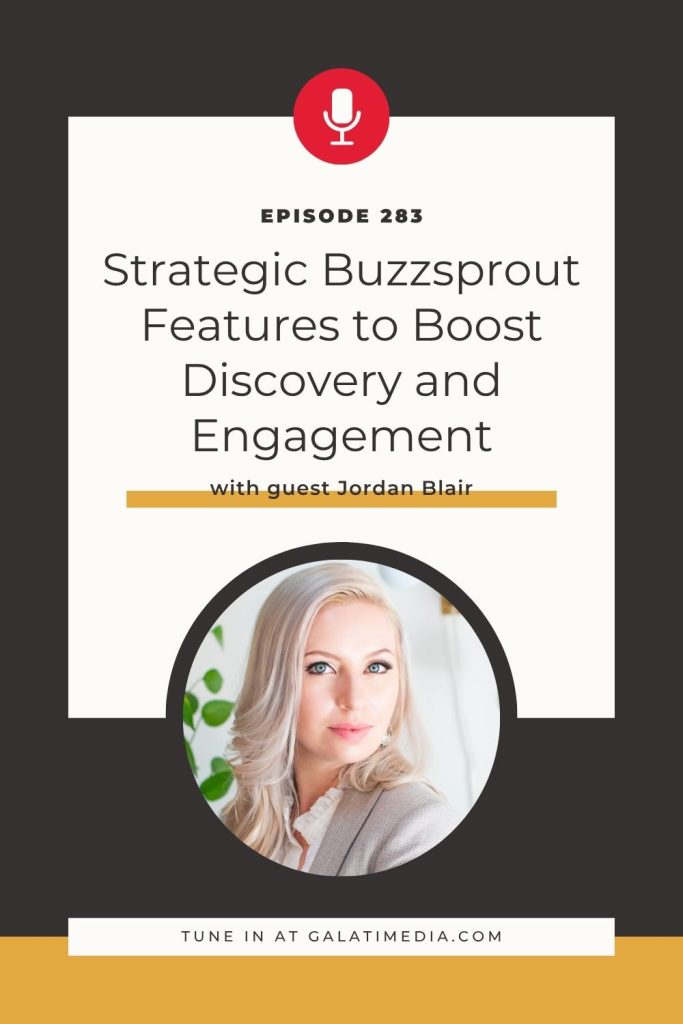
Many creators feel like they are shouting into a vacuum, putting out great episodes that aren’t being discovered by new audiences or search engines. This visibility gap is a major pain point for purpose-driven podcasters who want their message to reach the right people. In this episode, we sit down with Jordan Blair from Buzzsprout to explore the high-impact features that help your show stand out. We discuss things like how to use dynamic content for evergreen updates, why fan mail is the future of listener engagement, and how providing high-quality podcast transcripts ensures your show is understood by the next generation of AI and LLMs. This week, episode 283 of Podcasting Unlocked is about strategic Buzzsprout features to boost discovery and engagement! 

Key Takeaways:

  • Leverage Dynamic Content for Evergreen Impact: Discover how to use dynamic ad insertion to keep your back catalog fresh. Learn how to update intros and outros across your entire library in seconds to promote new offers or events.
  • Master the Art of Fan Mail: Move beyond the one-way broadcast. Learn how the Fan Mail feature creates a frictionless way for listeners to text you directly from their podcast app, driving deep audience engagement and providing instant feedback.
  • Optimize for AI and Search Discovery: Understand why high-quality podcast transcripts are no longer optional. Learn how providing text versions of your episodes helps LLMs and AI bots understand your expertise, significantly improving your podcast SEO.
  • Build a Home Base with Your Podcast Website: Explore why having a dedicated, host-provided website is crucial for authority. Learn how Buzzsprout’s built-in web tools help you capture search traffic and provide a professional landing page for your brand.
  • Adopt a Community-First Mindset: Jordan shares the value of lean, supportive communities. Learn how being active in spaces like the Buzzsprout Facebook group can help you solve technical hurdles and find new collaboration opportunities.

Strategic Buzzsprout Features to Boost Discovery and Engagement with Jordan Blair

YOUTUBE EMBED

Dynamic Content: Keeping Your Back Catalog Evergreen

One of the biggest mistakes podcasters make is treating their past episodes like old news. In reality, your back catalog is often where new listeners start their journey with you. If you have an intro from three years ago promoting a workshop that no longer exists, you are creating a broken experience for your audience.

This is where dynamic content changes the game. Buzzsprout’s dynamic ad insertion allows you to swap out intros and outros across your entire episode library in seconds. “You can use this to keep your back catalog fresh,” Jordan explained.

Whether you are promoting a new book launch, a seasonal offer, or simply want to update your One Next Step call to action, dynamic content ensures that every listener—no matter which episode they find first—gets the most relevant and up-to-date version of your brand.

The Fan Mail Revolution: Two-Way Engagement

For years, podcasting has been a one-way broadcast. You speak into a microphone, and the audience listens in silence. Building a community in that environment is difficult because the friction for a listener to provide feedback is too high—they have to stop what they are doing, find you on social media, and send a DM.

Buzzsprout’s Fan Mail feature solves this by allowing listeners to text you directly from their podcast app. It removes the friction and invites immediate interaction. “It’s about turning that one-way broadcast into a two-way conversation,” Jordan noted.

When your listeners feel like they can reach you with the tap of a button, your audience engagement skyrockets. You get instant feedback on what resonates, and your listeners feel like active participants in the show’s journey.

SEO for the AI Era: Why Transcripts are Non-Negotiable

We are living in the age of Large Language Models (LLMs) and AI search bots. If your podcast is only available as an audio file, you are invisible to these bots. To improve your podcast SEO, you must provide high-quality text that search engines can crawl.

Providing podcast transcripts is no longer just an accessibility feature; it is a discovery strategy. When you upload a transcript to Buzzsprout, you are feeding the AI bots the data they need to understand your expertise. If someone asks an AI tool for the “best strategy for podcast monetization,” you want the bot to have read your transcript so it can recommend your show as the answer.

Building Authority with a Dedicated Podcast Website

While it is great to have your show on Apple and Spotify, you don’t own those platforms. You need a home base where you control the narrative. Buzzsprout provides built-in, customizable podcast websites that serve as a professional landing page for your brand.

A dedicated website helps capture long-tail search traffic. When you have a professional site that hosts your episodes, show notes, and transcripts, you build immediate authority with new visitors. It serves as a centralized hub where you can guide listeners toward your email list or your Substack community, ensuring that your podcast discovery leads directly to business growth.

The Power of a Lean, Supportive Community

Finally, growth doesn’t happen in a silo. One of the standout aspects of the Buzzsprout ecosystem is their Facebook community. Jordan, who admins the group, highlighted how these lean, supportive spaces allow creators to solve technical hurdles and find collaboration opportunities quickly.

Being part of a community of peers allows you to see what is working for others and stay ahead of industry shifts. In podcasting, your network is often your greatest growth hack.

Unlock Your Show’s Growth Engine

Your hosting platform shouldn’t be an afterthought. By strategically using dynamic content, engaging via Fan Mail, and optimizing for search with transcripts, you transform your podcast from a static file into a dynamic marketing asset.

Your Strategic Challenge for This Week:

  1. Transcript Check: Do your last five episodes have transcripts? If not, use Buzzsprout’s built-in tools to generate them today.
  2. Enable Fan Mail: If you haven’t turned this feature on, do it now and invite your listeners to text you in your next recording.
  3. Update One Dynamic Intro: Take 5 minutes to record a fresh 30-second intro about your current priority and push it out to your entire back catalog.

Feeling overwhelmed by the technical “how-to” of these features? Sometimes you just need someone to help you “lift the hood” and find the specific tweaks that will move the needle for your show. If you are ready to stop guessing and start growing, I’m here to help.

Be sure to tune in to all the episodes to receive tons of practical tips on turning your podcast listeners into leads and to hear even more about the points outlined above. 

Thank you for listening! If you enjoyed this episode, take a screenshot of the episode to post in your stories and tag me! And don’t forget to follow, rate and review the podcast and tell me your key takeaways!

Learn more about Podcasting Unlocked at https://galatimedia.com/podcasting-unlocked/ 

CONNECT WITH JORDAN BLAIR:

LinkedIn

Buzzcast

CONNECT WITH ALESIA GALATI:

Instagram

LinkedIn

Work with Galati Media! 

Work with Alesia 1:1

LINKS MENTIONED:

Buzzsprout*

Otter.ai*

*affiliate links

Auditing Your Call to Action: The One Next Step Rule | Podcasting Unlocked

Do you end your episodes by asking your listeners to rate, review, subscribe, follow you on Instagram, and join your email list all at once? If so, you might be accidentally stalling your business growth. When you give your audience a laundry list of chores, you trigger listener paralysis, ensuring they do absolutely nothing. Most people listen to podcasts while driving, folding laundry, or working out; they don’t have the mental bandwidth to navigate a multi-step checklist. In this episode of Podcasting Unlocked, we explore the One Next Step rule—a simple but transformative strategy to streamline your calls to action. This week, episode 282 of Podcasting Unlocked is about auditing your call to action! 

Key Takeaways:

  • Master the One Next Step Rule: Learn why focusing on a single, clear action is the most effective way to increase your podcast conversion rates. 
  • Audit Your CTAs (Intro, Outro, and Dynamic Ads): Discover how to identify conversion leaks in your show’s structure. Learn why your intro and outro need to align with a single priority to keep your audience from dropping off.
  • Reduce the Listener’s Mental Load: Understand the multitasking listener mindset. Learn how to craft instructions that are easy to follow even when your audience is driving or at the gym.
  • Implement High-Value Lead Magnets: Explore examples of simple, high-value resources—like checklists, guides, or bonus solo episodes—that entice listeners to join your email list or Substack community.
  • Shift from Chores to Value: Learn how to reframe your requests from “do this for me” (rating/reviewing) to “here is more value for you” (a free resource), building immediate trust and authority.

Auditing Your Call to Action: The One Next Step Rule

YOUTUBE EMBED

The List of Chores

We often treat our podcast outros like a catch-all junk drawer for our marketing goals. We want the social proof of reviews, the ego boost of a high follower count, and the tangible lead generation of an email list. However, by asking for all of them at once, we turn our podcast into an obstacle course.

Think about the last time you were overwhelmed with choices. Usually, when faced with too many paths, the brain chooses the path of least resistance: doing nothing. By giving your listeners five different things to do, you’ve essentially given them a job to do at the end of their favorite show. No one wants more chores.

The Psychology of the Multitasking Listener

To understand why a laundry list of CTAs fails, we have to look at how people consume podcasts. Most of your audience isn’t sitting at a desk with a notebook, ready to click every link you mention. They are driving through traffic, folding a mountain of laundry, walking on a treadmill, or walking the dog.

Their mental bandwidth is already split between your voice and their physical surroundings. When you give them a multi-step checklist, the mental load becomes too high. If they have to remember to open Apple Podcasts to leave a review and then switch to Instagram to find your handle, you’ve already lost them. To increase listener engagement, you must meet your audience where they are: in a state of divided attention that requires extreme simplicity.

Introducing the “One Next Step” Rule

The most effective way to turn a listener into a lead is to implement the One Next Step rule. This strategy is simple: for every episode, you identify the single most valuable action your listener can take to move closer to their goals (and your business).

Instead of a laundry list, you provide a clear, singular path. This doesn’t mean you can never ask for a review or a social follow; it means you choose the priority for that specific episode. If your goal this quarter is to grow your Substack or email list, then every sign-off should be dedicated to that one next step. By focusing on a single CTA, you remove the friction and make it easy for a busy, multitasking listener to say “yes.”

Auditing Your Podcast Funnel

To truly optimize your show for conversions, you need to audit three specific areas of your episode structure:

  1. The Intro: Are you wasting precious minutes at the beginning with a generic “don’t forget to subscribe” message? Use your intro to hook the listener and briefly mention the value they can get from your primary Next Step resource.
  2. Dynamic Ads: If you use dynamic ad insertion, ensure your mid-roll or pre-roll ads aren’t conflicting with your main goal. If your outro asks for an email sign-up but your mid-roll asks for an Instagram follow, you’re creating internal competition for your listener’s attention.
  3. The Outro: This is the most critical area. Replace the chore list with a high-value invitation. Instead of saying “please rate and review,” try saying, “If you found this helpful, the best next step is to grab my [Free Guide/Checklist] which helps you implement exactly what we talked about today.”

Shift from Chores to Value

The secret to a high-converting CTA is reframing. Most podcasters approach CTAs as a request for a favor (“Please do this for me”). To see real business growth, you must reframe your CTA as an offer of more value (“I have this for you”).

Listeners are far more likely to take action when they perceive a direct benefit to themselves. A lead magnet—like a checklist, a meditation, or a bonus solo episode—is a much stronger motivator than a request for a five-star rating. When you provide a high-value resource that solves a problem mentioned in the episode, you aren’t giving them a chore; you’re giving them a solution.

Simplify to Amplify

Your podcast should be a clear bridge between your expertise and your ideal client. If that bridge is cluttered with too many signs and directions, people will stop halfway across. By simplifying your message and sticking to the One Next Step rule, you amplify your impact and make it easy for your community to grow with you.

Your challenge this week is to go back and listen to your last three podcast outros. Are you giving your audience a laundry list of chores? If so, pick just one valuable next step for your next recording. Remove the clutter and watch your engagement numbers shift.

Is your podcast strategy pulling your listeners in too many directions? Sometimes we are too close to our own content to see the “conversion leaks.” If you’re ready to fix your funnel and build a clear path from listener to lead, I’m here to help you talk it through. Book a free 15-minute consultation at helpmypod.com. Let’s look at your show together and find the one next step that will unlock your show’s full potential.

Be sure to tune in to all the episodes to receive tons of practical tips on turning your podcast listeners into leads and to hear even more about the points outlined above. 

Thank you for listening! If you enjoyed this episode, take a screenshot of the episode to post in your stories and tag me! And don’t forget to follow, rate and review the podcast and tell me your key takeaways!

Learn more about Podcasting Unlocked at https://galatimedia.com/podcasting-unlocked/ 

CONNECT WITH ALESIA GALATI:

Instagram

LinkedIn

Work with Galati Media! 

Work with Alesia 1:1

LINKS MENTIONED:

Setting Business Podcast Goals

Podcast Goals Workshop

Transitioning Your Podcast Format with Confidence with Jen Vertanen | Podcasting Unlocked

Are you feeling restricted by your current podcast format? Many creators start with a traditional audio-only show, only to find that their message or personality eventually outgrows the medium. The fear of breaking what already works often keeps podcasters stuck in a production style that no longer feels authentic.In this episode of Podcasting Unlocked, Alesia Galati sits down with Jen Vertanen to explore the internal decision-making process behind a major format pivot, the importance of building self-trust as a creator, and how embracing your unique humanity can actually deepen your audience engagement. This week, episode 281 of Podcasting Unlocked is about transitioning your podcast format with confidence! 

Key Takeaways:

  • Master the Format Pivot: Learn the tactical and emotional steps to transition your show from audio-only to video and live stream formats while maintaining your brand’s soul.
  • Build Unshakeable Self-Trust: Discover how to use tools like Human Design and the Enneagram to understand your natural strengths, allowing you to make production decisions that feel aligned rather than forced.
  • Embrace Radical Authenticity: Explore why showing up in your thought leadership and your humanity is the fastest way to solve audience loneliness and build a dedicated community of peers.
  • Navigate Neurodivergence in Content Creation: Gain insights into how understanding your own brain—including neurodivergence and mental health—can help you design a sustainable podcasting workflow that prevents burnout.
  • The Live Stream Advantage: Understand why moving to a live format can remove the shame of perfectionism and create a raw, real connection that recorded episodes often miss.

Transitioning Your Podcast Format with Confidence with Jen Vertanen

Format as an Evolution, Not a Final Destination

We often treat our podcast format like a permanent decision, but in reality, it should be a reflection of where you are in your journey. Jen’s show, We the Unruly, didn’t start as a live stream. It evolved through three distinct phases:

  1. Audio-Only: Focusing on the core message and the raw power of the voice.
  2. Audio and Video: Adding the visual layer to build deeper trust and expand to platforms like YouTube.
  3. Live Streaming: Breaking the digital “fourth wall” to foster real-time community and connection.

Each transition wasn’t just a technical change; it was a response to her growth as a leader. “Over time, you might find that your podcast style or the format in which you podcast changes,” we discussed during the episode. The goal isn’t to pick one format and stay there forever; it’s to find the format that allows you to show up as your most expanded self.

Building Unshakeable Self-Trust

One of the biggest hurdles to a format pivot isn’t the technology—it’s the lack of self-trust. We look at what the experts are doing or what the latest industry trends suggest, and we try to force ourselves into those boxes.

Jen emphasizes the importance of using tools like Human Design or the Enneagram to build a foundation of self-trust. When you understand your natural energy and how you process information, you stop making production decisions based on “shoulds.”

For example, if you are a “Manifesting Generator” in Human Design, you might thrive on the variety and spontaneity of a live show. If you are someone who deeply values privacy but has a powerful message, a high-production audio-only show might be your zone of genius. When your format aligns with your internal design, the work of podcasting becomes significantly more sustainable.

Humanity Over Perfection: The Live Stream Advantage

Many creators avoid video or live streaming because they are afraid of the unpolished moments. We worry about the lighting, the background, or stumbling over our words. However, Jen argues that this “unruly” humanity is exactly what audiences are craving in 2026.

“I ask everyone to show up in their thought leadership and their humanity,” Jen shared regarding her community. By moving to a live format, you remove the shame of perfectionism. You allow your audience to see the real you—stumbles and all.

This level of transparency is the fastest way to solve audience loneliness. When you show up as a peer rather than a distant authority figure, you create a space where your listeners feel safe to own their own unruly histories and identities. In a world of highly curated content, your authenticity is your most valuable SEO strategy.

Navigating Neurodivergence and Sustainable Workflows

A major part of the pivot conversation involves designing a show that respects your mental health and unique brain. Whether you are navigating neurodivergence, midlife transitions, or the general ebbs and flows of entrepreneurship, your podcast shouldn’t be a source of burnout.

Jen’s transition to live streaming was, in part, a way to create a more sustainable podcasting workflow. By recording live, she eliminated the perfectionist’s loop of endless editing and re-recording. This raw and real approach allows for more frequent content creation without the heavy administrative burden that often leads to podfade.

Break the Rules and Find Your Voice

Your podcast is a living, breathing entity. It is okay for it to change. In fact, if you want your show to last for the next five or ten years, it must change. Don’t be afraid to break the rules you made for yourself when you first started.

Your Action Plan for This Week:

  1. The Alignment Audit: Does your current format feel like a “get to” or a “have to”?
  2. The “Human” Check: Where are you hiding your humanity behind a “professional” script?
  3. The Small Pivot: Try one small change this week—maybe it’s adding a video component to a solo episode or hosting a quick 10-minute live Q&A.

Ready to pivot but feeling overwhelmed by the “how”? If you need a partner to help you “lift the hood” on your current strategy and navigate the technical and emotional shifts of a format transition, I’m here to support you. Let’s find the format that lets your message truly shine.

Be sure to tune in to all the episodes to receive tons of practical tips on turning your podcast listeners into leads and to hear even more about the points outlined above. 

Thank you for listening! If you enjoyed this episode, take a screenshot of the episode to post in your stories and tag me! And don’t forget to follow, rate and review the podcast and tell me your key takeaways!

Learn more about Podcasting Unlocked at https://galatimedia.com/podcasting-unlocked/ 

CONNECT WITH JEN VERTANEN:

Facebook

Instagram

Website

CONNECT WITH ALESIA GALATI:
Instagram

LinkedIn

Work with Galati Media! 

Work with Alesia 1:1

How a Narrow Focus is the Key to Podcasting Longevity with Kandas Rodarte | Podcasting Unlocked

Many creators fear that niching down will stunt their growth, but in reality, a broad focus is often what leads to stagnation. If you’ve struggled to build a loyal community or feel misaligned with your current content, this episode is for you! In this episode of Podcasting Unlocked, we sit down with internet marketing pioneer Kandace Rodarte to explore the power of doubling down. Kandace shares how narrowing her focus to specific audiences—like Gen X women or science fiction enthusiasts—allowed her brands to expand and feel more aligned. We dive into the mindset shift required to move from broadcasting to community building, how to maintain podcast consistency across a 12-year journey, and more! This week, episode 280 of Podcasting Unlocked is about how a narrow focus is the key to podcasting longevity! 

BUZZSPROUT EMBED

Key Takeaways:

  • The Expansion of the Niche: Discover why focusing on a very specific audience (like Gen X women) actually creates more room for growth. Learn how a narrow focus allows you to become a trusted authority faster than a general-interest show.
  • Longevity Through Alignment: Kandace shares the secrets to 12 years of podcast consistency. Learn how to navigate the ebbs and flows of business by ensuring your content remains aligned with your personal values and your audience’s evolving needs.
  • Relationship-Based Guest Selection: Move beyond big names and learn how to select guests who truly resonate with your specific community. Discover how authentic connections drive deeper audience engagement than vanity metrics ever could.
  • Adapting as a Digital Pioneer: Gain insights from a marketing expert who has seen the digital landscape evolve since the 90s. Learn which core principles of digital marketing remain timeless and how to pivot your strategy without losing your brand’s soul.

How a Narrow Focus is the Key to Podcasting Longevity with Kandas Rodarte

YOUTUBE EMBED

The Niche Paradox: Why Focusing Down Creates More Room

Kandace’s journey is a perfect example of the Niche Paradox. By narrowing her focus to specific groups—like Gen X women or science fiction enthusiasts—she actually found more room to expand.

“When you decide that you are going to double down on an audience that makes sense for you, it actually can increase your audience,” Kandace explained.

When you have a specific niche, you aren’t competing with the big shows. You are becoming the definitive authority for a specific group of people. This specificity builds a wall around your community that generic shows can’t penetrate. It turns your listeners into a tribe, rather than just a collection of anonymous download numbers.

The Ottoman Strategy: A Lesson from Custom Furniture

The most fascinating part of our conversation was Kandace’s Ottoman analogy. Before she was a full-time marketer, she and her husband ran a custom furniture business. They didn’t try to sell a whole house full of furniture at once. They focused on one piece—maybe an Ottoman—and mastered it.

“When you focus, then you can expand,” she noted. She shared a story about a client who eventually had a piece of their furniture in every room of her house. Why? Because the client became a collector.

Your podcast should work the same way. If you try to give your audience the whole house in your first ten episodes, they’ll get overwhelmed and leave. But if you focus on your Ottoman—that one specific pain point or niche topic—you build a “collector’s mindset” in your listeners. They consume one episode, love the specificity, and then they want the next piece, and the next, until they’ve consumed your entire back catalog.

12 Years of Consistency: The Power of Alignment

Staying consistent for a year is hard. Staying consistent for 12 years is almost unheard of in the podcasting world. How did Kandace do it? By ensuring her niche was perfectly aligned with her own values and the ebbs and flows of her life.

Podcast consistency isn’t just about having a schedule; it’s about having a topic that you are genuinely excited to talk about even when the newness wears off. Kandace’s Gratitude Geek show survived a decade of digital changes because the core mission—relationship-based marketing and gratitude—remained a constant in her life.

When you niche down, you aren’t just helping your audience find you; you are helping yourself stay engaged. It is much easier to keep going when you are talking to your people about a topic you love than it is to keep up a broad, professional persona for a general audience.

Relationship-Based Marketing Over Vanity Metrics

As a pioneer who started in 1999, Kandace has seen countless trends come and go. But the one thing that never changes? The power of relationships.

In our conversation, we discussed how to move away from broadcasting (one-way communication) and toward community building (two-way relationships). This starts with your guest selection. Instead of chasing the biggest name to get the most downloads, Kandace looks for guests who will truly resonate with her specific niche. This results in deeper audience engagement, more meaningful reviews, and a show that actually converts listeners into clients or supporters.

Conclusion: What is Your “Ottoman”?

If you feel like you are shouting into a void, the answer isn’t to shout louder; it’s to move closer to the people who are actually listening.

Your Niche Challenge for This Week:

  1. Identify the Broadness: Where are you trying to be everything to everyone?
  2. Find the Ottoman: What is one specific segment of your audience or one specific topic that you could talk about for hours?
  3. Double Down: For your next three episodes, speak only to that specific person. Watch how much easier it becomes to write your scripts and engage your community.

Ready to find your standout niche and scale your show? If you are tired of the “broadcasting” grind and want to build a community that lasts, let’s “lift the hood” on your strategy. I specialize in helping purpose-driven podcasters find the alignment and specificity they need to see real growth.

Be sure to tune in to all the episodes to receive tons of practical tips on turning your podcast listeners into leads and to hear even more about the points outlined above. 

Thank you for listening! If you enjoyed this episode, take a screenshot of the episode to post in your stories and tag me! And don’t forget to follow, rate and review the podcast and tell me your key takeaways!

Learn more about Podcasting Unlocked at https://galatimedia.com/podcasting-unlocked/ 

CONNECT WITH KANDAS RODARTE:

Instagram

Website

Gratitude Geek Podcast

Sci-Fi Book Pod

CONNECT WITH ALESIA GALATI:
Instagram

LinkedIn

Work with Galati Media! 

Work with Alesia 1:1

LINKS MENTIONED:

Your Imposter Syndrome Is Lying to You | Podcasting for Confidence with Alesia Galati

Galati Media
Privacy Overview

This website uses cookies so that we can provide you with the best user experience possible. Cookie information is stored in your browser and performs functions such as recognising you when you return to our website and helping our team to understand which sections of the website you find most interesting and useful.