Category Archive : Uncategorized

The 15-Minute Weekly Podcast Maintenance Routine & The End? | Podcasting Unlocked

Are you struggling to keep up with the overwhelming demands of running a podcast alongside a busy business and personal life? Many creators are trapped in a constant cycle of endless weekly upkeep, believing that managing a successful show requires hours of tedious labor every single week. In this 300th(!) episode of Podcasting Unlocked, Alesia Galati dismantles the myth of heavy weekly management by introducing an actionable, highly efficient 15-minute weekly podcast maintenance routine. Additionally, she addresses the end of an era: why this is the final regular episode of Podcasting Unlocked and how you can continue utilizing this 300-episode archive to scale your business, grow your audience, and streamline your audio strategy. This week, episode 300 of Podcasting Unlocked is about the 15-minute weekly podcast maintenance routine! 

Key Takeaways:

  • Minutes 0–5: The Fast Metric Check: Open your hosting dashboard to evaluate your 30-day download trends, identify your top-performing recent episode, and pinpoint past evergreen hits that may indicate guest promotion surges or SEO traction.
  • Minutes 5–10: The Link and Call-to-Action (CTA) Audit: Verify that your lead magnet links are active, ensure your dynamic ad placements (pre-rolls, mid-rolls, and post-rolls) are current, and check for crucial legal or professional disclosures (such as FTC affiliate notes or medical/legal disclaimers).
  • Minutes 10–15: The Targeted Engagement Sweep: Spend five focused minutes reviewing community comments across your primary platform, answering listener questions, and pulling one high-value inquiry to use as content for a future newsletter or episode.
  • The Final Episode & What’s Next: Understand why Podcasting Unlocked is sunsetting at Episode 300, how to navigate the categorized episode archive, and where to follow Alesia’s future projects.
  • Leverage Evergreen Media Assets: Learn how to treat a completed podcast catalog as a permanent sales funnel that continues driving authority, SEO keywords, and brand trust long after active production stops.

The 15-Minute Weekly Podcast Maintenance Routine & The End?

The 15-Minute Podcast Maintenance Blueprint

Set a timer on your phone for 15 minutes, divide it into three 5-minute blocks, and tackle these three quick checks every week.

Minutes 0–5: The Metric Check

Start by opening your podcast hosting platform dashboard (like Buzzsprout) and reviewing your downloads over the last 30 days:

  • Identify your top recent performer: Look at which single episode performed best over the past week.
  • Spot your top monthly performer: See which episode led overall download numbers for the past 30 days.
  • Audit your backlog: Notice if an older episode suddenly spiked. When past episodes pop up, it often means a guest recently reshared their interview or someone searched for a trending topic. Reach out to that past guest to say thank you and reconnect—it’s a friction-free way to keep your network alive!

Minutes 5–10: The Link & Call-to-Action (CTA) Audit

Next, transition over to your links and promotional messaging:

  • Check dynamic ads: If you use dynamic ad insertion for your pre-rolls, mid-rolls, or post-rolls, make sure your current promotional campaigns are aligned with your active business goals.
  • Verify lead magnet links: Click the primary call-to-action links in your recent show notes. Ensure they point to active landing pages, live consultation calendars, or active freebies rather than expired masterclasses.
  • Ensure legal compliance: Confirm that standard disclaimers—like FTC affiliate disclosures or medical/legal notices—are clearly formatted across your templates.

Minutes 10–15: The Targeted Engagement Sweep

Finish your 15 minutes by opening your primary community channel (whether that’s your Substack chat, an email inbox, or a core social media platform):

  • Reply to listener feedback: Answer comments or direct messages from listeners. Setting a strict 5-minute timer prevents you from getting pulled into mindless social media scrolling.
  • Mine for content ideas: Pull one thoughtful listener question or comment to use as inspiration for a future email newsletter, blog post, or social snippet.

Celebrating 300 Episodes: The End of an Era

Reaching 300 numbered episodes is a major milestone, and reaching it feels both incredible and deeply fulfilling. When I launched Podcasting Unlocked, my goal was to provide purpose-driven podcasters with actionable, no-nonsense strategies to amplify their message, build audience trust, and turn audio feeds into real business growth.

Over these 300 episodes, we have built a complete, comprehensive audio library. Whether you are looking to fix technical recording issues, transition away from weekly guest interviews, plan a stress-free podcast sabbatical, or implement subscription monetization on Substack, there is an episode in our archive ready to guide you step-by-step.

While I will no longer be releasing regular weekly solo or interview episodes for Podcasting Unlocked, this feed isn’t going anywhere. It will remain active as a permanent resource library for podcasters at every stage of their journey. You may also see occasional bonus feed drops in the future highlighting extraordinary shows and creators within our community!

What’s Next & How to Stay Connected

Closing this chapter allows me to dedicate my creative energy toward exciting new horizons:

  • We Read Smut & Substack: I am focusing heavily on growing my show We Read Smut and building our thriving community over on Substack. If you want to follow along with my creative writing and community-building experiments, come join us there!
  • Community for Podcasters: If you are a podcaster looking for high-level collaboration, guest networking, and ongoing industry support, I highly recommend joining the Feminist Podcasters Collective. It is hands-down one of the best creator communities I’ve ever been part of.

Thank You for an Incredible Journey!

To every single listener who has tuned in, shared an episode, implemented a strategy, or sent an encouraging message over the years: thank you from the very bottom of my heart. Your time and attention are the greatest gifts a content creator can receive, and hosting this show has been an honor.

Need support auditing your podcast format or setting up an automated audio strategy? Our 1-on-1 strategic support isn’t stopping! You can access our full suite of workshops, free resources, and strategy bookings anytime.

Book a strategy session with me at helpmypod.com, and let’s optimize your audio systems so your podcast continues serving your business for years to come!

Until next time, keep building systems that support your life, and happy podcasting!

Be sure to tune in to all the episodes to receive tons of practical tips on turning your podcast listeners into leads and to hear even more about the points outlined above. 

Thank you for listening! If you enjoyed this episode, take a screenshot of the episode to post in your stories and tag me! And don’t forget to follow, rate and review the podcast and tell me your key takeaways!

Learn more about Podcasting Unlocked at https://galatimedia.com/podcasting-unlocked/ 

CONNECT WITH ALESIA GALATI:

Instagram

LinkedIn

Work with Galati Media! 

Work with Alesia 1:1

LINKS MENTIONED:
Feminist Podcaster Collective

We Read Smut Substack

Turning Your Back Catalog into a Lead Generation Machine | Podcasting Unlocked

Podcasting can be one of the most effective ways to generate leads, build authority, and create long-term content for your business. But too often, podcasters focus all their energy on creating new episodes while overlooking one of their most valuable assets: the content they’ve already published. If you have dozens—or even hundreds—of episodes sitting in your archive, you may be missing out on opportunities to attract new listeners, generate leads, and drive sales from content you’ve already worked hard to create.

In this episode of Podcasting Unlocked, Alesia Galati shares practical strategies for reviving your podcast back catalog and turning old episodes into evergreen marketing assets. From organizing your content into listener-friendly libraries to using dynamic ad insertion and refreshing episode titles for SEO, these simple updates can help your podcast continue working for your business long after an episode goes live.

This week, episode 292 of Podcasting Unlocked is about transforming your podcast archive into a lead-generating machine!

In this episode of Podcasting Unlocked, I’m sharing actionable strategies to help you maximize the value of your existing podcast content, improve discoverability, and create more opportunities for listeners to connect with your offers.

Key Takeaways:

  • Turn Your Podcast Into an Evergreen Library: Learn how organizing episodes by topic, challenge, or audience need makes it easier for listeners to find the content most relevant to them.
  • Create Curated Podcast Playlists: Discover how grouping episodes into themed collections improves the listener experience and encourages binge listening.
  • Use Dynamic Ad Insertion to Promote Current Offers: Learn how dynamic ads allow you to update promotions, workshops, and announcements across your entire catalog without re-recording episodes.
  • Keep Your Audience Informed: Explore how dynamic announcements can help listeners stay up to date on podcast schedule changes, season breaks, and new releases.
  • Refresh Old Episode Titles for Better SEO: Understand why updating vague episode titles can dramatically improve discoverability and help new listeners find your content through search.
  • Optimize Your Podcast Content Across Platforms: Learn why your podcast host and YouTube channel require different optimization strategies to maximize visibility.

Turning Your Back Catalog into a Lead Generation Machine

YOUTUBE EMBED

Stop Treating Your Podcast Like a Timeline

Most podcasters think of their show as a chronological feed. Episode 1 comes first, then Episode 2, then Episode 3, and so on.

The problem is that listeners don’t consume podcasts that way.

A new listener might discover your latest episode today and immediately start searching for content related to a specific challenge they’re facing. If they have to scroll through hundreds of episodes to find what they need, many won’t stick around long enough to become loyal fans or clients.

Instead, think of your podcast as an evergreen content library.

One of the most effective ways to do this is by organizing episodes into categories or playlists based on listener needs. For example, if you’re a coach who talks about mindset, productivity, and business growth, create dedicated resource pages that group episodes by topic.

This allows listeners to quickly find relevant content and consume multiple episodes around a single challenge, increasing trust and accelerating their journey toward becoming a client.

Use Dynamic Ad Insertion to Keep Your Content Relevant

One of the biggest mistakes podcasters make is relying solely on baked-in promotions.

Imagine a listener discovering an episode today that includes a call-to-action for a workshop that happened two years ago. Not only does that create confusion, but it can also result in lost opportunities and damaged credibility.

Dynamic ad insertion solves this problem.

By adding dynamic ads to your episodes, you can promote current offers, workshops, lead magnets, or services across your entire catalog—even episodes published years ago.

Whether someone listens to Episode 2 or Episode 292, they’ll hear the same up-to-date promotion.

Dynamic ads can also be used to:

  • Announce upcoming events
  • Promote new offers
  • Share podcast schedule changes
  • Notify listeners about seasonal breaks
  • Direct listeners to your newest resources

Instead of allowing old content to become outdated, dynamic ads keep your archive working as an active marketing tool.

Update Your Episode Titles for Search Visibility

When many podcasters launch their show, they often use titles like:

  • Episode 12 with Sarah Smith
  • Interview with John Doe
  • Episode 7: Business Conversations

While these titles may have made sense at the time, they do very little to help new listeners discover your content through search.

Most listeners aren’t searching for episode numbers.

They’re searching for solutions.

A stronger title might look like:

  • How to Overcome Imposter Syndrome During a Launch with Sarah Smith
  • The Business Systems Every Entrepreneur Needs to Scale
  • How to Build Confidence as a New Podcast Host

By clearly communicating the problem solved in the episode, you improve both search visibility and click-through rates.

Even small title updates can dramatically increase the lifespan and discoverability of older content.

Optimize Beyond Your Podcast Host

Your podcast title isn’t the only thing worth revisiting.

Many podcasters simply copy and paste their show notes directly into YouTube without making any platform-specific adjustments.

But podcast platforms and YouTube serve different audiences and rely on different search behaviors.

Take time to review:

  • Episode titles
  • Descriptions
  • Keywords
  • Tags
  • Metadata

Optimizing content for each platform helps ensure your episodes reach the right audience wherever they’re searching.

The more intentional you are about discoverability, the more value you’ll get from every episode you’ve already created.

Your Back Catalog Is a Business Asset

Many podcasters spend all their time thinking about what’s next.

The next guest.
The next episode.
The next launch.

But sometimes the biggest opportunities are sitting in content you’ve already created.

Your podcast archive contains valuable conversations, insights, and resources that can continue attracting listeners and generating leads for years to come.

A few simple updates today can dramatically increase the return on all the work you’ve already done.

Your Action Plan This Week

Audit Your Top Three Episodes

Review the calls-to-action in your most downloaded episodes and determine whether they still point listeners toward active offers.

Set Up Dynamic Ads

Create a current promotional message that can be inserted across your entire back catalog.

Review Your Episode Titles

Look at your first 50 episodes and identify opportunities to make titles more descriptive and search-friendly.

Organize Existing Content

Create a category page, playlist, or resource hub that helps listeners find related episodes more easily.

If you’re sitting on a large archive of podcast content and aren’t sure how to maximize its value, visit helpmypod.com and book a strategy session.

Together, we’ll audit your podcast catalog, identify opportunities for growth, and build a system that turns your existing content into a consistent source of leads and visibility.

Be sure to tune in to all the episodes to receive practical podcasting strategies, expert insights, and actionable systems that help you grow your show, attract more listeners, and get the most out of every episode you create.

Thank you for listening! If you enjoyed this episode, take a screenshot of the episode to post in your stories and tag me! And don’t forget to follow, rate and review the podcast and tell me your key takeaways!

Learn more about Podcasting Unlocked at https://galatimedia.com/podcasting-unlocked/ 

CONNECT WITH ALESIA GALATI:

The Podcast Workflow Audit: Systems, AI, & Automation to Get Your Time Back| Podcasting Unlocked

Podcasting can be one of the most powerful ways to grow your business, but if every episode leaves you feeling overwhelmed, exhausted, and scrambling to keep up, something needs to change. Sustainable podcasting isn’t about working harder—it’s about building systems that support you behind the scenes. In this episode of Podcasting Unlocked, we’re opening the vault and revisiting some of the most impactful conversations we’ve had about creating a podcast workflow that actually works. This special compilation episode features insights from four podcasting experts who have mastered efficiency, automation, and sustainable growth. From custom GPTs and project management systems to editing shortcuts and intentional calendar management, these strategies will help you streamline your process and reclaim your time. Whether you’re a solo podcaster or managing a growing team, you’ll walk away with practical ideas you can implement immediately. This week, episode 289 of Podcasting Unlocked is about building a sustainable podcast workflow!

In this episode of Podcasting Unlocked, I’m sharing expert-backed strategies to simplify your podcasting process, reduce overwhelm, and create systems that support long-term success.

Key Takeaways:

  • Create Custom GPTs That Function Like SOPs: Learn how Marcy Rossi uses custom GPTs to automate repetitive podcast tasks while preserving her unique voice, style, and content structure.
  • Build Repeatable Systems for Every Episode: Discover why Jacki Hayes believes documented workflows and project management tools are essential—even for solopreneurs.
  • Reduce Editing Time with Better Recording Habits: Explore Joe Casabona’s simple strategy of taking notes during interviews to dramatically speed up post-production.
  • Use Timestamps and Markers to Streamline Production: Learn how small recording habits can save hours of editing and improve collaboration with your team.
  • Manage Your Calendar Like a CEO: Understand Lance Cayko’s philosophy of making appointments instead of simply scheduling tasks and how that shift creates more freedom and consistency.

The Podcast Workflow Audit: Systems, AI, & Automation to Get Your Time Back

YOUTUBE EMBED

Stop Reinventing the Wheel with Custom GPTs

One of the biggest time drains in podcasting is repeating the same tasks over and over again. Writing show notes. Creating titles. Drafting social posts. Formatting content.

That’s why Marcy Rossi recommends building a custom GPT that functions like a Standard Operating Procedure (SOP).

Instead of starting from scratch every time, Marcy uploads examples of her past content, her preferred writing style, and detailed instructions into a custom GPT. The result is a system that understands her voice, follows her formatting preferences, and generates content that requires significantly less editing.

The real benefit isn’t just saving time—it’s reducing decision fatigue. When your systems already know how you work, you spend less energy managing the process and more energy creating meaningful content.

Why Every Podcaster Needs a Workflow System

Many podcasters assume project management tools are only necessary once they hire a team.

Jacki Hayes disagrees.

Whether you’re a solo creator or managing multiple contractors, having a documented workflow ensures that no important step gets missed. Guest communication, recording preparation, file organization, publishing deadlines, promotion tasks—every part of the process should have a home.

Jacki uses ClickUp to manage her podcast, complete with recurring checklists, templates, and documented SOPs. Even when she temporarily worked with a virtual assistant, the handoff process was seamless because everything was already documented.

The lesson here is simple: systems aren’t something you create after growth. They’re what make growth possible.

Cut Your Editing Time in Half

For many podcasters, editing is the most time-consuming part of the production process.

Joe Casabona shared one of the simplest productivity hacks imaginable: take notes while you’re recording.

Instead of listening to the entire interview again later, jot down quick timestamps whenever something needs attention:

  • Guest misspoke
  • Host stumbled over a question
  • Great quote for a cold open
  • Segment that needs to be shortened
  • Technical issue to remove

These notes become a roadmap for editing.

Combined with platforms like Descript or Riverside, timestamps make it significantly easier for you—or your editor—to find key moments without searching through an hour-long recording.

A few seconds spent taking notes during the conversation can save hours afterward.

Small Recording Habits Create Massive Time Savings

Another insight from Joe’s interview focused on how you handle mistakes during recording.

Many hosts try to power through errors without stopping. Unfortunately, that often creates more work later.

Instead, simply pause.

Take a breath. Gather your thoughts. Then restart the sentence.

Those pauses create visual markers in editing software, making mistakes much easier to identify and remove.

Likewise, using built-in tools like markers, clip notes, or timestamps can dramatically improve the editing process without requiring any additional software.

Sometimes the fastest workflow improvements come from changing your habits—not adding new tools.

Stop Scheduling Tasks and Start Making Appointments

One of the most powerful mindset shifts in this episode came from Lance Cayko.

When asked how he manages a successful architecture firm, teaches at universities, hosts a podcast, and maintains a personal life, his answer was surprisingly simple:

“I make appointments.”

Instead of viewing tasks as optional items on a to-do list, Lance treats everything that matters as a calendar commitment.

That includes:

  • Podcast recordings
  • Content creation
  • Exercise
  • Family time
  • Self-care
  • Professional development

By making appointments for what matters, he creates intentional space for both his business and personal priorities.

His philosophy is rooted in a simple belief:

Discipline creates freedom.

When you proactively allocate your time, you’re far less likely to feel overwhelmed by competing priorities.

Sustainable Podcasting Requires Infrastructure

The common thread throughout all four expert interviews wasn’t AI, software, or productivity hacks.

It was intentionality.

Sustainable podcasting doesn’t happen because you’re more motivated than everyone else.

It happens because you’ve built systems that support you.

Whether that’s a custom GPT, a project management platform, a note-taking habit, or a better calendar strategy, the goal is the same: create infrastructure that allows your podcast to thrive without consuming your entire life.

Your Action Plan This Week

Build One Repeatable Process
Choose one recurring podcast task and document it step-by-step as an SOP.

Take Notes During Your Next Recording
Add timestamps whenever something important happens and compare your editing time afterward.

Audit Your Calendar
Identify one podcast-related activity you can turn into a recurring appointment instead of a last-minute task.

Create a System Before You Need One
Even if you’re a solo creator today, start documenting your workflow now to make future delegation easier.

If podcasting is starting to feel overwhelming, remember that you don’t have to work harder—you need systems that work smarter.

If you’d like help auditing your workflow, identifying bottlenecks, and building a sustainable podcast production process, visit helpmypod.com and book a free consultation.

Together, we’ll create a workflow that supports your podcast, your business, and your life.

Be sure to tune in to all the episodes to receive practical strategies for growing your podcast, streamlining production, and turning listeners into loyal clients.

Thank you for listening! If you enjoyed this episode, take a screenshot of the episode to post in your stories and tag me! And don’t forget to follow, rate and review the podcast and tell me your key takeaways!

Learn more about Podcasting Unlocked at https://galatimedia.com/podcasting-unlocked/ 

CONNECT WITH ALESIA GALATI:

MENTIONED EPISODES:

Episode 236 with Marci Rossi

Episode 253 with Jacki Hayes

Episode 157 with Joe Casabona

Episode 143 with Lance Cayko

Keeping the Humanity in Podcasting with Bud Kraus | Podcasting Unlocked

Are you stuck in the technical weeds of your niche, struggling to find a deeper connection with your audience? Many podcasters feel like they have to follow a rigid, data-heavy format to stay relevant, especially in technical industries like WordPress development or software engineering. In this episode of Podcasting Unlocked, Alesia Galati sits down with Bud Kraus, creator of the Seriously Bud? podcast. We discuss how to flip the script on traditional industry interviews by focusing on the “who” instead of the “how”, and how you can leverage human storytelling to build a community that truly cares. This week, episode 268 of Podcasting Unlocked is about keeping humanity in podcasting! 

BUZZSPROUT EMBED

Key Takeaways:

  • Prioritize the Person Over the Process: Shift your interview strategy from “how the tech works” to the personal story of the creator. By focusing on the human journey—the failures, the motivations, and the wins—you create an emotional connection that technical specs simply can’t achieve.
  • Build a “Fully Formed” Strategy: Learn the value of starting with a clear, singular vision for your show. When your podcast idea is fully formed before you hit record, your consistency and branding become much easier to maintain.
  • The Power of the Friday 8 AM Rule: Bud shares his strict commitment to podcast consistency. Discover why picking a specific time and day for your release—and never missing it—is the fastest way to build listener trust and reliable habits in your audience.
  • In-Person Interviews as a Differentiator: In a world of remote recordings, learn how in-person networking and interviews at industry events can provide a unique energy and quality that sets your show apart from the competition.

Keeping the Humanity in Podcasting with Bud Kraus

YOUTUBE EMBED

Prioritize the Person Over the Process

Most industry-specific podcasts follow a predictable pattern: a host interviews a guest about their latest project, the tools they used, and the steps they took to reach a goal. While this is informative, it often lacks an emotional connection.

Bud Kraus decided to flip this script. In his Uncovered series, he intentionally avoids the “how” of WordPress development. Instead, he asks about the “who.” He explores the failures, the motivations, and the personal journeys of the creators in the space.

“I wanted to know who these people were,” Bud explained. “Not just what they did, but why they did it and what their journey looked like behind the scenes.”

When you prioritize the human story, you transform your guest from a “talking head” into a relatable figure. Your listeners stop seeing them as an unreachable expert and start seeing them as someone who has faced the same struggles they are currently facing. That shift is what builds true listener trust.

The ‘Fully Formed’ Strategy: Why Vision Precedes the Mic

One of the most striking things about Bud’s approach is that his podcast idea came to him fully formed. He didn’t just start recording and hope a theme would emerge; he had a clear, singular vision for what the show would be and how it would serve the community.

Many podcasters suffer from content burnout because they haven’t clarified their show’s core message. They try to be everything to everyone, which leads to a scattered feed and a confused audience.

A fully formed strategy allows you to:

  • Maintain Consistency: When you know exactly what your show is about, you don’t have to reinvent the wheel every week.
  • Attract the Right Guests: You can easily identify which experts align with your show’s narrative.
  • Build a Brand Identity: Your show becomes known for a specific perspective, making it easier for listeners to recommend it to others.

Consistency: The Friday 8 AM Rule

We talk a lot about podcast consistency on this show, but Bud takes it to a professional level. His “Friday 8 AM” rule is a masterclass in building reliable audience habits. Every Friday morning, without fail, a new episode of Seriously Bud drops.

“It’s about building a relationship with your audience,” Bud noted. “They should know exactly when to expect you. If you show up when you say you’re going to show up, they will keep showing up for you.”

This level of discipline creates a “contract” between you and your listeners. In a world of inconsistent social media algorithms, a reliable podcast release schedule is one of the few ways to ensure you stay top-of-mind for your community.

Breaking the Screen: The Energy of In-Person Interviews

While remote recording tools are a gift for podcasters, there is a unique energy that can only be captured in person. Bud highlighted the value of attending industry events—like WordCamps in the WordPress community—to record interviews.

In-person networking and recording allow for:

  • Natural Rapport: It is much easier to read body language and pick up on subtle emotional cues when you are sitting across from someone.
  • Higher Production Energy: The buzz of a live event often translates into a more dynamic and engaging audio experience.
  • Unique Networking Opportunities: Being on the ground at an event positions you as a leader and a connector within your niche.

If you have the opportunity to take your show on the road, even just once a year, the “human” quality of those recordings will stand out in your feed.

AI: The Assistant, Not the Storyteller

We can’t talk about the future of content without talking about AI. Both Bud and I agree that AI tools are incredible for the “heavy lifting” of production—transcripts, show note drafts, and episode preparation.

However, AI should never be the author of your show’s “soul.” AI can summarize a technical manual, but it cannot empathize with a guest’s story of overcoming a business failure. Use AI to streamline your workflow so that you have more time to focus on the human connections that matter.

As Bud so eloquently put it, “Podcasting just has a way of worming its way under your skin.” Once you get hooked on the storytelling aspect, you realize that the tech is just the vehicle—the story is the destination.

Tell the Stories That Matter

Your niche might be technical, but your audience is human. This week, take a look at your upcoming content calendar. Where can you inject more personality? How can you move from the “how” to the “who”?

Your Action Plan:

  1. Ask a “Human” Question: In your next interview, ask your guest about a significant challenge they faced early in their career.
  2. Audit Your Consistency: Pick a specific release time and day for the next month and stick to it religiously.
  3. Document Your Vision: Write down the one-sentence “mission” of your show. Is it fully formed?

If you are feeling stuck in a technical rut or your podcast feels like it’s missing its soul, I’m here to help. I love lifting the hood on shows to find the narrative that will truly resonate with an audience. Book a free 15-minute strategy session at helpmypod.com.

To learn more about Bud Kraus and hear the incredible human stories he’s uncovering, visit SeriouslyBud.com.

Be sure to tune in to all the episodes to receive tons of practical tips on turning your podcast listeners into leads and to hear even more about the points outlined above. 

Thank you for listening! If you enjoyed this episode, take a screenshot of the episode to post in your stories and tag me! And don’t forget to follow, rate and review the podcast and tell me your key takeaways!

Learn more about Podcasting Unlocked at https://galatimedia.com/podcasting-unlocked/ 

CONNECT WITH BUD KRAUS:

LinkedIn

Facebook

Seriously, BUD? podcast

Website

CONNECT WITH ALESIA GALATI:

Instagram

LinkedIn

Work with Galati Media! 

Work with Alesia 1:1

LINKS MENTIONED:

Ep 141: How To Improve Your Podcast’s Accessibility with Maxwell Ivey

Is Your Podcast Too Broad_ Find Your Focus for Faster Growth Blog Cover

Hey there, fellow podcasters! Have you ever felt like you’re talking to a wall? Maybe your download numbers are just “meh,” or you’re struggling to convert listeners into clients. If so, I have a question: Is your podcast too broad? As content creators, we need to find our focus quickly to attract the right listeners.

Now, before you start panicking, let me assure you, that there’s nothing wrong with having a broad topic when you start. It’s important to find your focus as you grow and evolve, unlocking a new level of success.

Is Your Podcast Too Broad? Find Your Focus for Faster Growth

“Jack of all trades, master of none.” We’ve all heard the phrase that is meant to encourage business owners to focus on nicheing down. In the content marketing world, trying to appeal to everyone often means not truly connecting with anyone. My recent podcast discussed why niching down your messaging is key to serving your target audience at the highest level.

Additional Tips for Podcast Content: 

Why Niching Down to Find Your Focus is a Game-Changer

We can’t all be margaritas and tacos. 

In other words, we can’t make everyone happy. And if you’re trying to appeal to everyone, you’re probably not truly resonating with anyone.

Niching down means refining a broad topic or audience. It means identifying the people you really want to serve, the ones who will get the most value out of your content.

What niching down doesn’t mean:

  • Excluding everyone else: People outside your niche might still find your content valuable.
  • Running out of things to discuss: You’ll be surprised at how many angles and stories you can uncover within a niche.
  • Limiting your growth potential: In fact, niching down can often accelerate your growth by attracting the right kind of listeners.

What niching down does mean:

  • Speaking directly to your ideal listener’s pain points and desires
  • Becoming the go-to expert in your specific area
  • Building a loyal community of raving fans

The Power of the Niche: Real-World Examples

I’ve seen the power of niching down firsthand with my clients. 

One client, who speaks to a similar audience as a podcaster with a million downloads, was frustrated by the comparison. But here’s the thing: She speaks about the topic from a unique lens, attracting a smaller subset of that larger audience. And that’s a good thing! It’s the beauty of niching down—you differentiate yourself and become irresistible to those who connect with your specific approach.

Another client, who focused their podcast on female WordPress designers looking to grow their business, was able to fill their group programs effortlessly. Their niche was so specific that listeners instantly knew they were in the right place and eager to work with them.

Niching Down: Your Action Plan

Of course, nicheing down does require you to find your focus. But focusing on quality, not quantity, is key when building true authority as a thought leader in your industry. 

While broader approaches aim to please many, niche content serves a select few at the highest level.

  1. Identify your ideal listener: Who are they? What are their struggles? What do they dream of?
  2. Refine your topic: What specific aspect of your broad topic can you own?
  3. Tailor your content: Speak directly to your niche’s pain points and offer solutions.
  4. Build your community: Engage with your listeners, invite their feedback, and create a space where they feel seen and heard.

Don’t Be Afraid to Experiment!

Remember, there are no hard and fast rules in podcasting. If you try niching down and find it’s not for you, that’s okay. You can always pivot and try something new. The most important thing is to be intentional about your choices and create a podcast that you’re truly passionate about.

Need Help? I’m Here for You!

I’d love to support you if you’re ready to take the leap and niche down your podcast. Book a strategy session with me, or if you’re interested in launching a limited series, check out how we can work together. 

If you are thinking about launching a podcast on a budget, now is the time to get into action!

Right now, there are more than 500 million blogs out of 1.7 billion websites. And there are over 2 million blog posts going out into the internet lands daily. There are more than 31 million Youtube channels out there. People around the world are uploading 500 hours of video every minute.

But! There are only 850,000 active podcasts. That means that right now is prime time to start the podcast you want.


What does this mean for launching your podcast on a budget?

If you remember back to blogging in 2009-2010, there weren’t that many blogs out there. Blogging was the way to create content and tell people your story. That is what podcasting is right now!

So don’t wait to start the podcast you’ve been thinking about. Just start and make forward motion. This post will give you the exact step-by-step guide on how to start your podcast on a budget. You don’t have to spend a ton of money to get your podcast off the ground. 

I’ve started two separate podcasts for less than $30! If I can do it, you can too! It’s easy to start a podcast on a budget. Simply follow these steps.

Here is the best budget equipment and systems you can get that won’t break the bank. If the podcast is meant to be a hobby and you want to make some affiliate and sponsor sales from it, then I recommend that you only spend money on hosting and a microphone. You can get by without all the other frills in the beginning.


Microphone (Budget Range $15-$45)

Your microphone can make or break your podcast. If you don’t want negative reviews about the sound quality of your podcast then it’s important to invest in a microphone. Honestly, your earbuds or headphones are better than using the computer or phone microphone. But these microphone options won’t break the bank and can still help you keep your sound quality at a decent level. 

FIFINE USB Microphone

This microphone comes highly recommended by Amazon as their choice microphone for podcasters. I’ve seen a lot of fantastic reviews about it and would have started with this one if I didn’t need a lapel one since I podcasted in my car on my phone when I first started. 

PoP Voice Lapel Microphone

This is a microphone very similar to the one I started with. You don’t always need something fancy to start out. As long as you have something that works well, you can fix any issues on the editing side. If you are just looking to start, there is nothing wrong with using this one. It keeps your S’s and P’s from being too overpower and keeps the volume smooth. 


Recording / Editing Software (FREE)

Phone Apps

Don’t be afraid to start with just a voice app on your phone to record if you are recording from your car or very small closet. This is how I started doing my solo shows so I could record them on my lunch break. I was determined to get my podcast into the world 

Audacity for Window / PC

I use Audacity to edit my podcasts. Their manual is very easy to understand and they do a great job of helping you get started. There are tons of YouTube videos available if you get stuck.

Garageband for Mac

If you are a Mac user, then your Mac should already come with Garageband installed on it. I’ve heard that it is very similar to Audacity and easy to use. You can also record right into the program from your computer.


Call Recorder (FREE)

Zoom

Zoom is a great option for recording long distance interviews or co-hosted podcast episodes. In my first podcast, I had almost every other episode as an interview and Zoom was my go-to. Now that my sister and I record our podcast from different states (NY and NC), we use Zoom and haven’t had many issues. The only thing you have to be careful of is if the other person doesn’t have a great internet connection. Their audio may cut in and out on your end and in the recording. There are ways to edit this out so it doesn’t sound too terrible but it can be frustrating. 

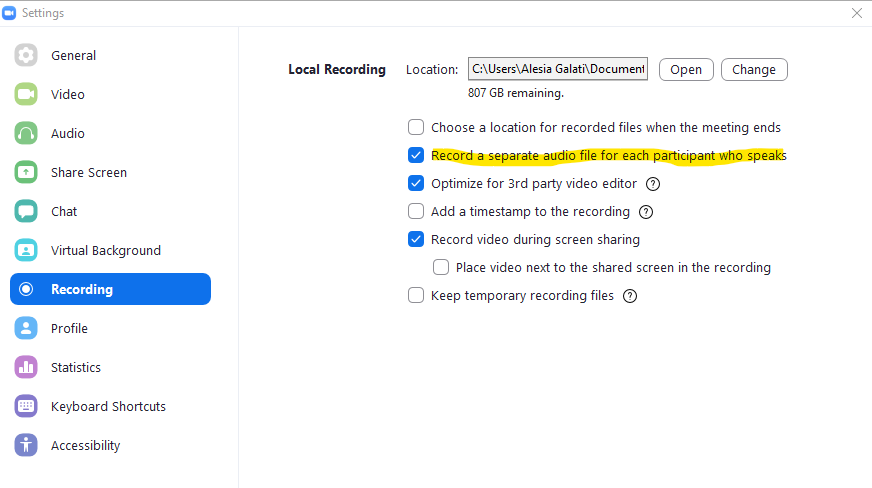
If you’ve ever recorded with someone else, you know that it can be easy to talk over each other. This can be really hard to edit out if you keep the audio for two people on one soundtrack. To make sure Zoom keeps the tracks separate, be sure to select Record a separate audio file for each participant who speaks in the Zoom Settings. This should give you two (or more) tracks when you are ready to edit. 

zoom for your podcast

Zencastr

Zencastr is another great option for interviews and connection. It does not allow audio, so that can be frustrating if you enjoy seeing your interviewee or co host. If you don’t mind it just being audio, this is a fantastic option. They offer up to 8 hours for 2 guests per month for free. 

The great thing about Zencastr is that the audio is uploaded to the cloud from each person’s computer so you don’t have to worry so much about a bad internet connection ruining the audio.


Intro / Outro Music and Voiceover (FREE)

Disclaimer: Using copyrighted music for your content is a big no-no. Please make sure you look into the fine print when using these websites. 

BandLab: Create Your Own Music

I love creating my own music for my podcasts or having my brother do it. We use the app and website, BandLab, to create a unique and fun piece of music. We then use this music in our intro and outro or for ads. This is great for any creative looking to launch their podcast on a budget.

Incompetech

This is one of the older royalty-free music sites. There are hundreds of songs available to choose from by the artist Kevin MacLeod. As long as you give credit at the end of your podcast description and website (if you have one), you are free to use any of the songs on the site for your podcast.

Free Music Archive

This website and app has a library full of songs that you can use for your podcast. This one isn’t a pick and run with the song kind of website though. The use for the music varies from song to song so make sure you read the fine print for each individual rights. You can read their FAQ to better understand what songs you can use for your podcast.

Musopen

Musopen offers an array of musical goodness. This website has sheet music, royalty-free music, and a free continuous stream of classical music radio. (SIGN ME IN!!!) If you are looking for classical music for your podcast then this is the website you’ll want to check out. They also have a pretty cool rating system so you don’t waste time looking through each song. 


Podcast Hosting (Price Range $12-$18)

I love Buzzsprout for it’s ease of use and amazing customer support. There are obviously other podcast hosts out there but I have found that Buzzsprout works best for me and my clients. 

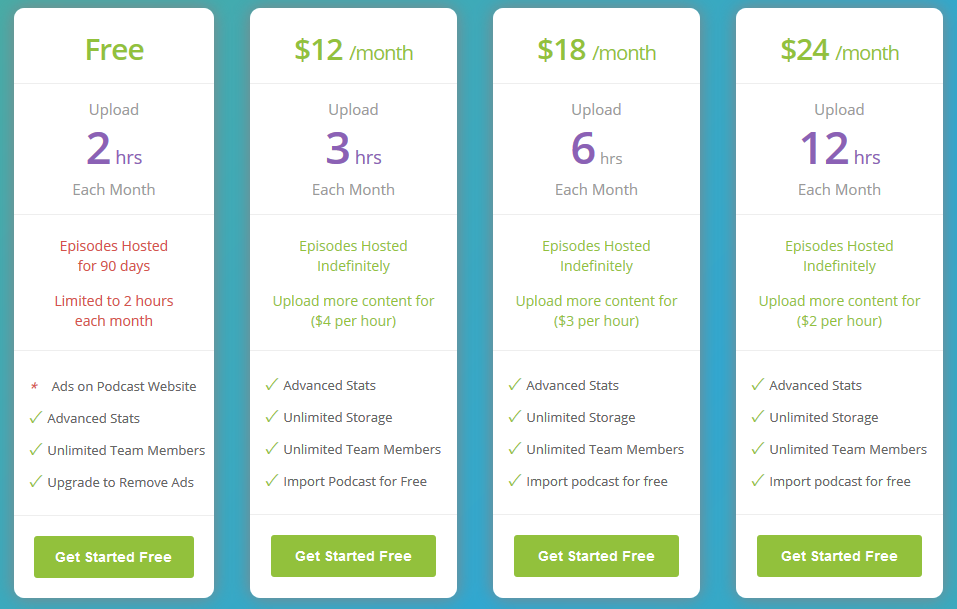
You can set up a FREE Buzzsprout hosting account but this only allows for up to 2 hours of uploaded audio and your episodes disappear (meaning: are no longer hosted) after 90 days. 

I recommend you sign up for the $12 / month plan since it includes indefinite hosting. This plan works great if you are keeping your weekly episodes on the shorter side and you might throw some longer interviews in there. When I had my business podcast, this was the plan that worked great for me.

podcast on a budget with buzzsprout

If you are going to have longer episodes coming out every week or you have more than one episode go out every week then the $18 / month plan would work best for you. This is the one used on my Two Sisters and a Cult podcast. Our weekly episodes are 1 – 1.5 hours long so we knew this one would work best for us.


Cover Art (FREE)

Your cover art should be attention-grabbing and should be very easy to read no matter how big or small the cover looks. This will help you be found by new listeners since some people look through categories and start listening to what grabs their attention. This will make it easy for you to launch your podcast on a budget.

Podcast Cover Art Guidelines:

  1. Your cover art must be in JPEG or PNG file format with the correct file extensions (.jpg, .png).
  2. In the RBG color space 
  3. Minimum size of 1400 x 1400 pixels and a maximum size of 3000 x 3000 pixels, 72 dpi. You can read more about specifications for podcasts on iTunes.

Canva

Canva is a great FREE tool that can help you create your own cover art for your podcast. I use this website and app for all of my podcast graphics and they make it very easy with their color and font options. 


In Total… Starting at Less than $30 to Start a Podcast!

There are plenty of other tools out there that you could purchase for your podcast, but if you want to get your story out into the world on a small(er) budget then I want to encourage you that it is totally possible. 

Getting your podcast on Apple Podcasts is a lot easier than you might think. You’ve got your first episode recorded, edited, and ready to go live but you have no idea how to submit your podcast to the most popular podcast directory. Follow the step-by-step guide below to get your brand new podcasts on Apple Podcasts!

Why is Apple Podcasts Important?

Apple Podcasts is the most popular podcast directory on the internet. Even if you are an avid Android user (my hand is raised), you still want to meet your audience where they are the most. Many podcasters have this issue. They think that just because Spotify, or whatever their favorite podcast listening app is, is the only app they use, then their audience feels the same.

By limiting yourself to one platform, you risk not reaching as many people as you might be able to if you make sure your podcast is listed in all the major platforms. It doesn’t take a lot of time and is one of the most important parts of having a successful podcast launch.

Step 1: Upload at Least One Episode

I absolutely love Buzzsprout (*Get a $20 Amazon gift card if you sign up for a paid plan) and highly recommend them as a podcast hosting system. You’ll need to upload at least on episode for Apple Podcasts to approve your show. 

Not sure if you want to have a trailer or first episode? You can check out the linked blog post to find out which might be best for your show.

Step 2: Make Sure You meet the Apple Podcast Requirements

Apple has a few requirements to get your podcast approved. These requirements are pretty standard for the industry and you shouldn’t need to do much more than this to get on all the other platforms. 

  1. Logo
    1. Your cover art must be in JPEG or PNG file format with the correct file extensions (.jpg, .png).
    2. In the RBG color space 
    3. Minimum size of 1400 x 1400 pixels and a maximum size of 3000 x 3000 pixels, 72 dpi. You can read more about specifications for podcasts on iTunes. 

Step 3: Find your podcast RSS feed

Buzzsprout

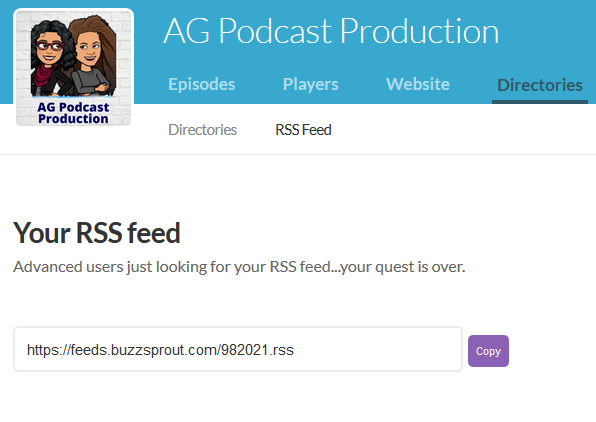
On your Buzzsprout dashboard, you can go to Directories -> RSS Feed to find your RSS feed. This is the information you need.

Libsyn

On your Libsyn dashboard, you can go to Destinations -> Edit/View Existing. Locate Libsyn Classic Feed in the listing and select view feed to find your RSS feed. This is the information you need.

Podbean

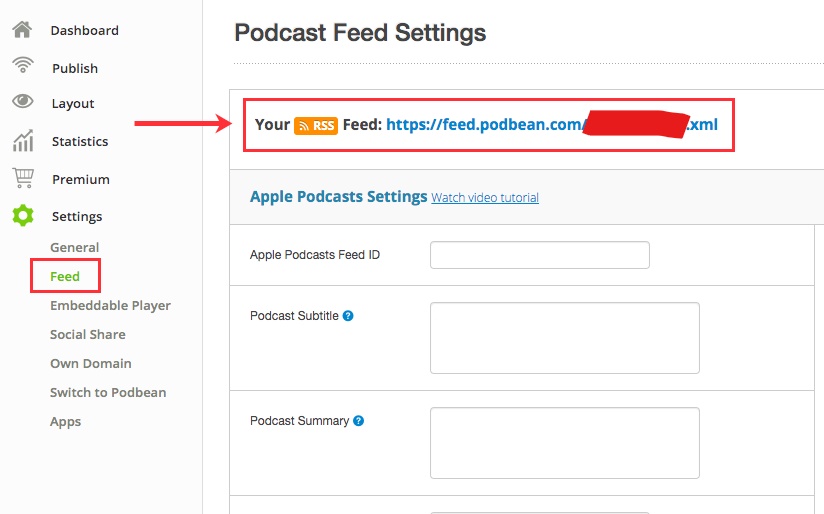
On your Podbean dashboard, you can go to Settings -> Feed to find your RSS feed. This is the information you need for.

Step 4: Submit your RSS feed to Apple Podcasts

Click the link below to submit your RSS feed to Apple Podcasts.

You’ll need an Apple ID in order to submit your podcast. If you don’t already have one, you can easily create an Apple ID account for free. It’s easy to do and doesn’t take much effort. 

Click “Validate” 

Review your podcast information for any errors and click “Submit“

It typically takes between 1-14 days for your podcast to be approved on Apple Podcasts. That’s why I recommend my clients submit up to 14 days before their official launch so they don’t run the risk of not being available on a major platform. They will send you an email and link once your podcast is approved.

Once you’ve uploaded your podcast to Apple Podcasts, it will automatically be available on popular podcast apps like the following:

So there you have it. You’ve now submitted your podcast show and simply need to wait for Apple Podcasts to approve it.

FAQ about Apple Podcasts:

Do I need an Apple ID and iTunes account to submit a podcast?

Yes, you definitely need a valid Apple ID to submit your new podcast. It does not cost anything and you can create an account without a credit card on file.

Do I have to submit my RSS fee every time I publish a new episode?

No. After you have been accepted into the Apple Podcasts directory, you don’t need to do anything else to be found on that platform. Apple Podcasts checks your RSS feed every 24 hours and updates the listings when you’ve uploaded more episodes with your hosting platform. Again, we recommend Buzzsprout to host your site.

Does Apple Podcasts (iTunes) host my podcast?

No, Apple Podcasts does not host your podcast. It is a podcast directory and doesn’t host audio files. They simply provide a place for people to find and learn about your podcast. To get your podcast listen on Apple Podcasts you’ll have to follow the guide above. 

Why didn’t Apple Podcasts approve my podcast fee?

I’m so sorry you didn’t get approved on your first time around. Some reasons your show might have been rejected is because it contains any of the following:

  • Unauthorized copyrighted material
  • Profane Metadata
  • Illegal Solicitations
  • Hate Speech
  • Erotica

You can troubleshoot failed, rejected, or removed podcasts using this link. Also, if you don’t submit new episodes to your podcast, it might disappear from areas in APple Podcasts so be sure to stay consistent with your production if you want new ears listening in.

Can I resubmit a podcast that’s been rejected?

Once you’ve fixed the reason your podcast was rejected, you can try to resubmit the fee to the platform.

Galati Media

Privacy Overview

This website uses cookies so that we can provide you with the best user experience possible. Cookie information is stored in your browser and performs functions such as recognising you when you return to our website and helping our team to understand which sections of the website you find most interesting and useful.